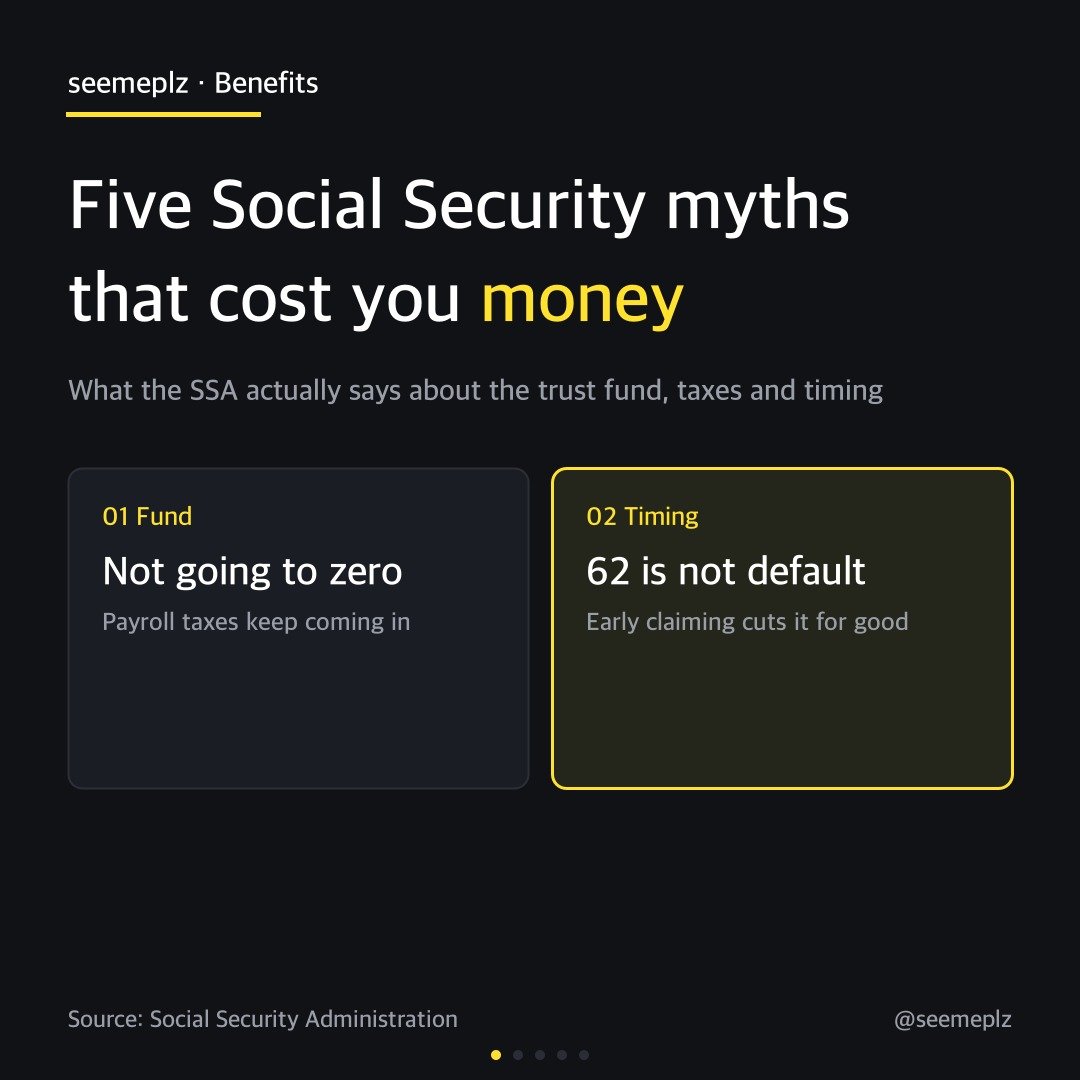
Five things people believe about Social Security that lead to worse decisions — and what the Social Security Administration actually says.
Myth 1: The trust fund is running out, so there will be nothing left
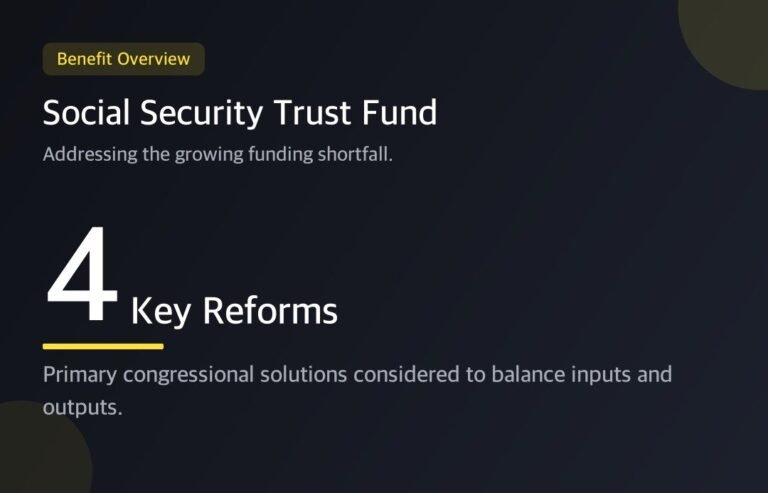
The trust fund and the program are not the same thing. Social Security is funded primarily by payroll taxes on current workers, which keep coming in regardless of the trust fund balance.
The SSA’s own trustees report projects that if the trust fund reserves are depleted, continuing tax income would still cover a large share of scheduled benefits. That is a benefit reduction scenario, not a zero.
What to do: Read the current year’s trustees report summary at ssa.gov rather than headlines about the fund "running dry."
Myth 2: You should always claim at 62
You can claim as early as 62, but the monthly amount is permanently reduced. Waiting until full retirement age gives you 100 percent of your calculated benefit, and delaying past that adds delayed retirement credits until age 70.
The right answer depends on your health, whether you are still working, and whether a spouse’s benefit is involved — not on a single age that fits everyone.
Myth 3: Benefits are never taxed
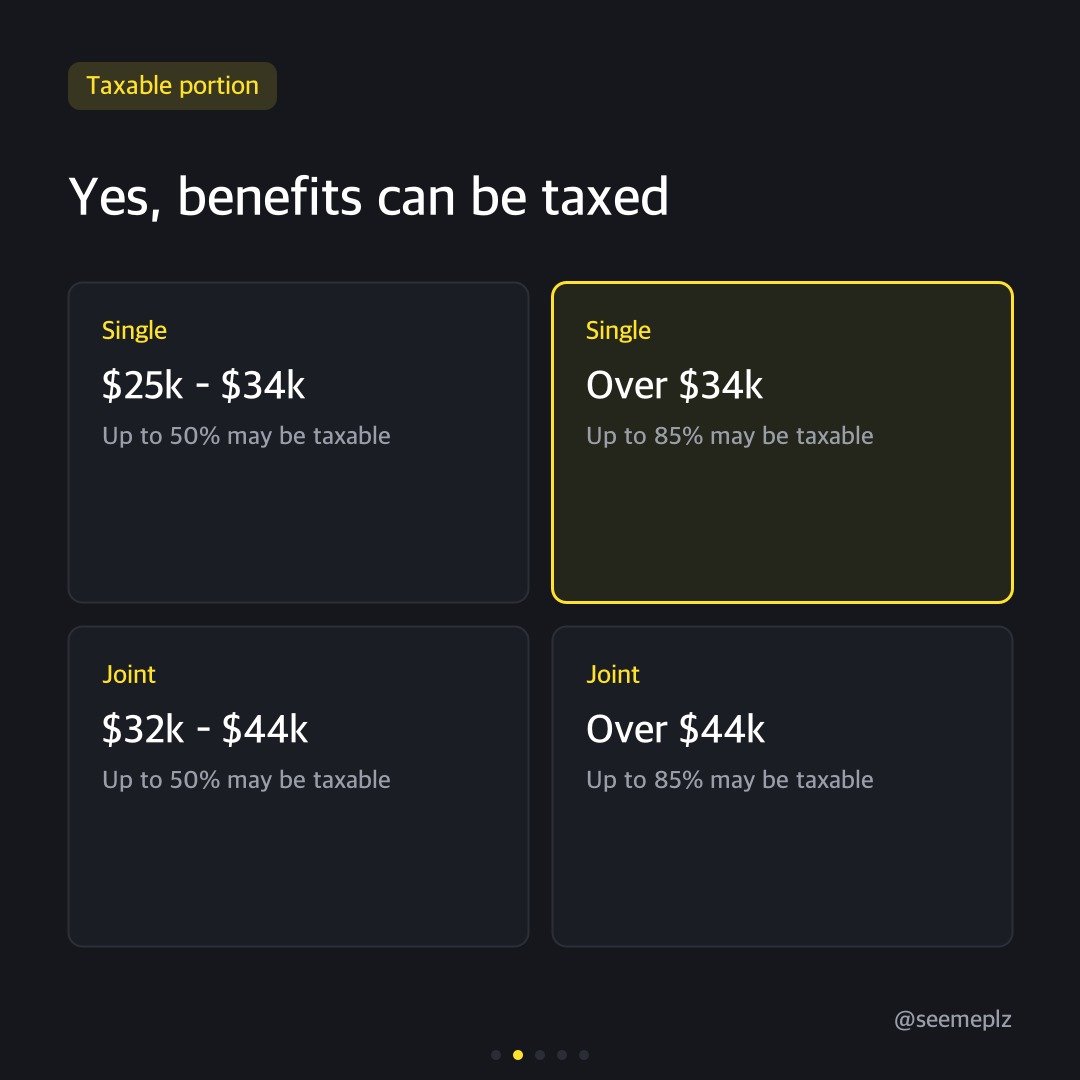
They can be. Whether any of your benefit is taxable depends on your combined income — adjusted gross income, plus nontaxable interest, plus half of your Social Security benefit.
| Filing status | Combined income | Portion that may be taxable |
|---|---|---|
| Single | $25,000 – $34,000 | Up to 50% |
| Single | Over $34,000 | Up to 85% |
| Married filing jointly | $32,000 – $44,000 | Up to 50% |
| Married filing jointly | Over $44,000 | Up to 85% |
Myth 4: Working after you claim always cuts your benefit permanently
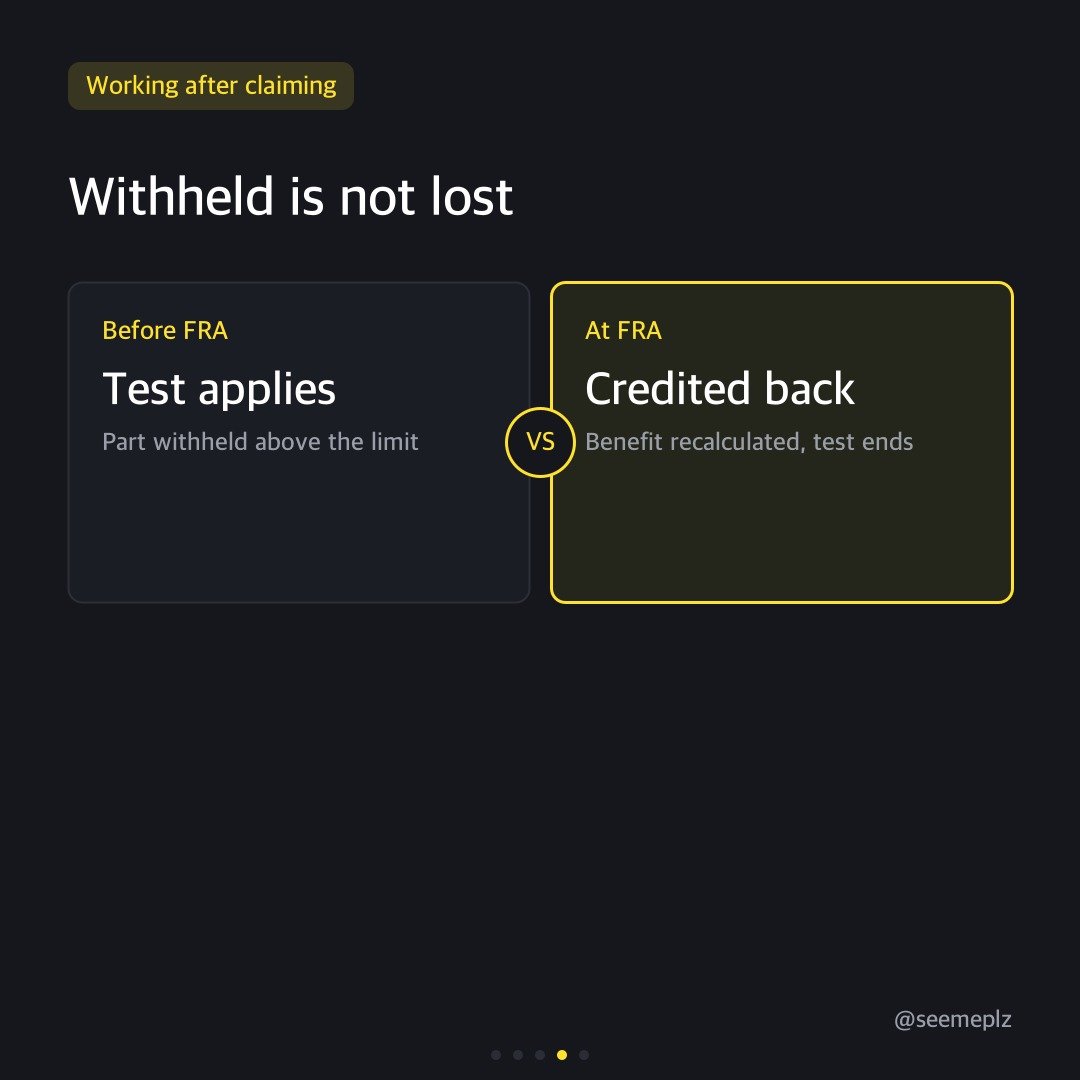
Before full retirement age, the earnings test can withhold part of your benefit if you earn above the annual limit. Those withheld amounts are not lost — your benefit is recalculated at full retirement age to credit them back.
After you reach full retirement age, the earnings test no longer applies at all.
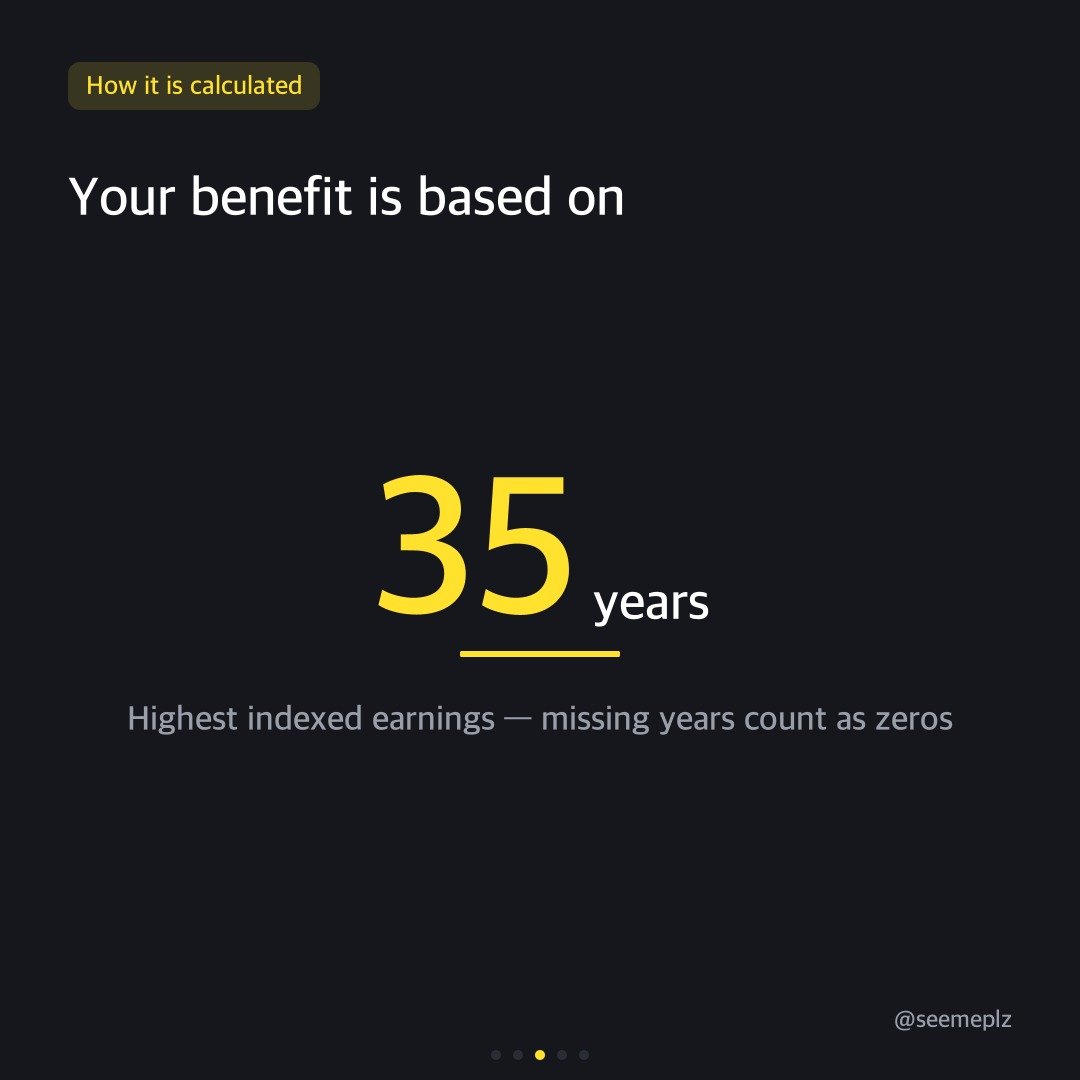
Myth 5: Your benefit is based on your last few years of work
It is based on your highest 35 years of indexed earnings. Years with no earnings count as zeros in that calculation, which is why a long career with gaps can produce a lower benefit than people expect.
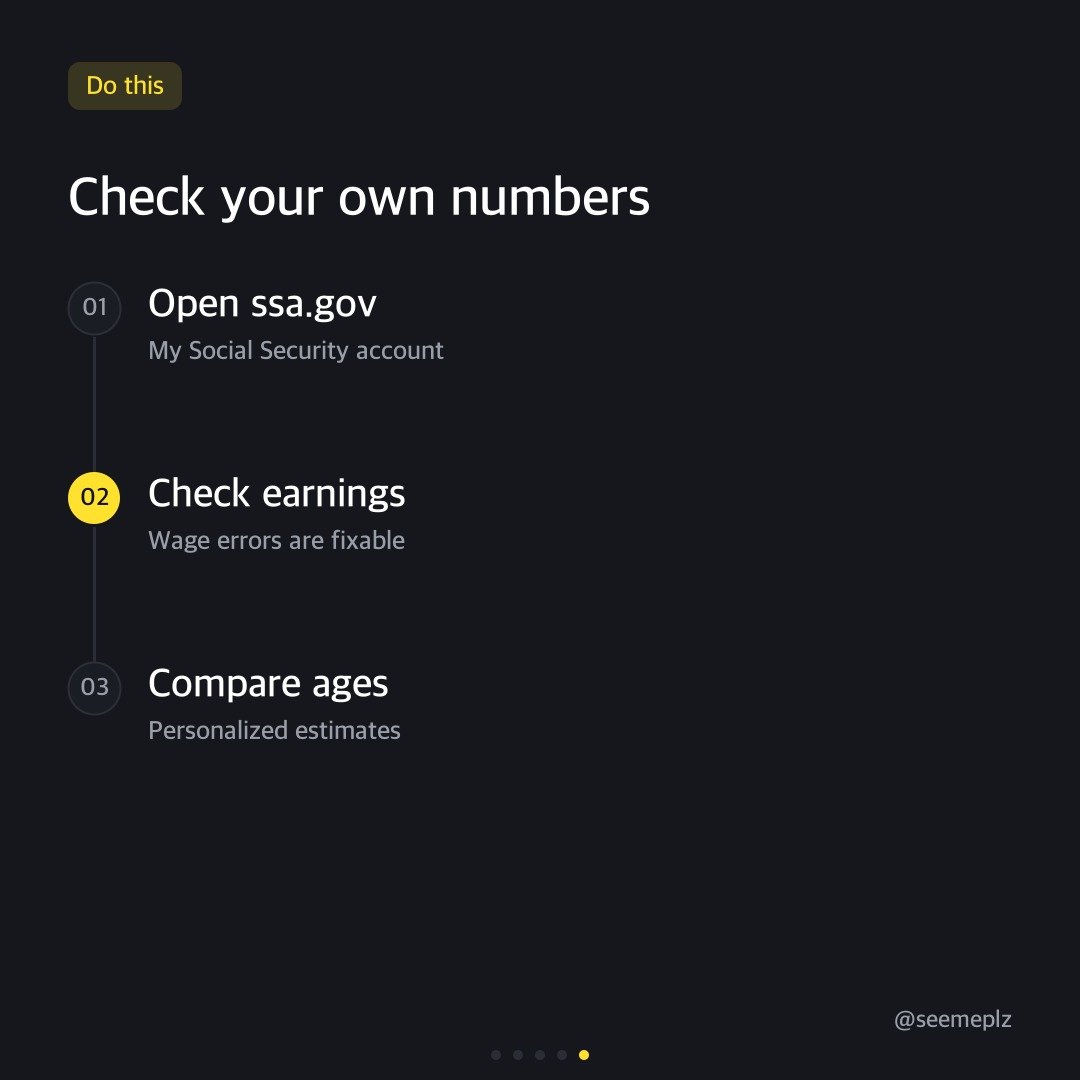
What to do: Check your earnings record in your My Social Security account. Errors in reported wages are fixable, and they directly affect your benefit.
Frequently asked questions
Where can I see my own numbers instead of general rules?
Your My Social Security account at ssa.gov shows your earnings record and personalized benefit estimates at different claiming ages.
Does claiming early affect my spouse’s survivor benefit?
It can. Survivor benefits are based on the deceased worker’s benefit amount, so claiming reductions can carry through. Ask the SSA about your specific situation before deciding.
Can I change my mind after claiming?
There is a limited withdrawal window after you first claim, and rules apply. Contact the SSA directly rather than relying on general guidance.