Understanding China’s Pension System and Inequality
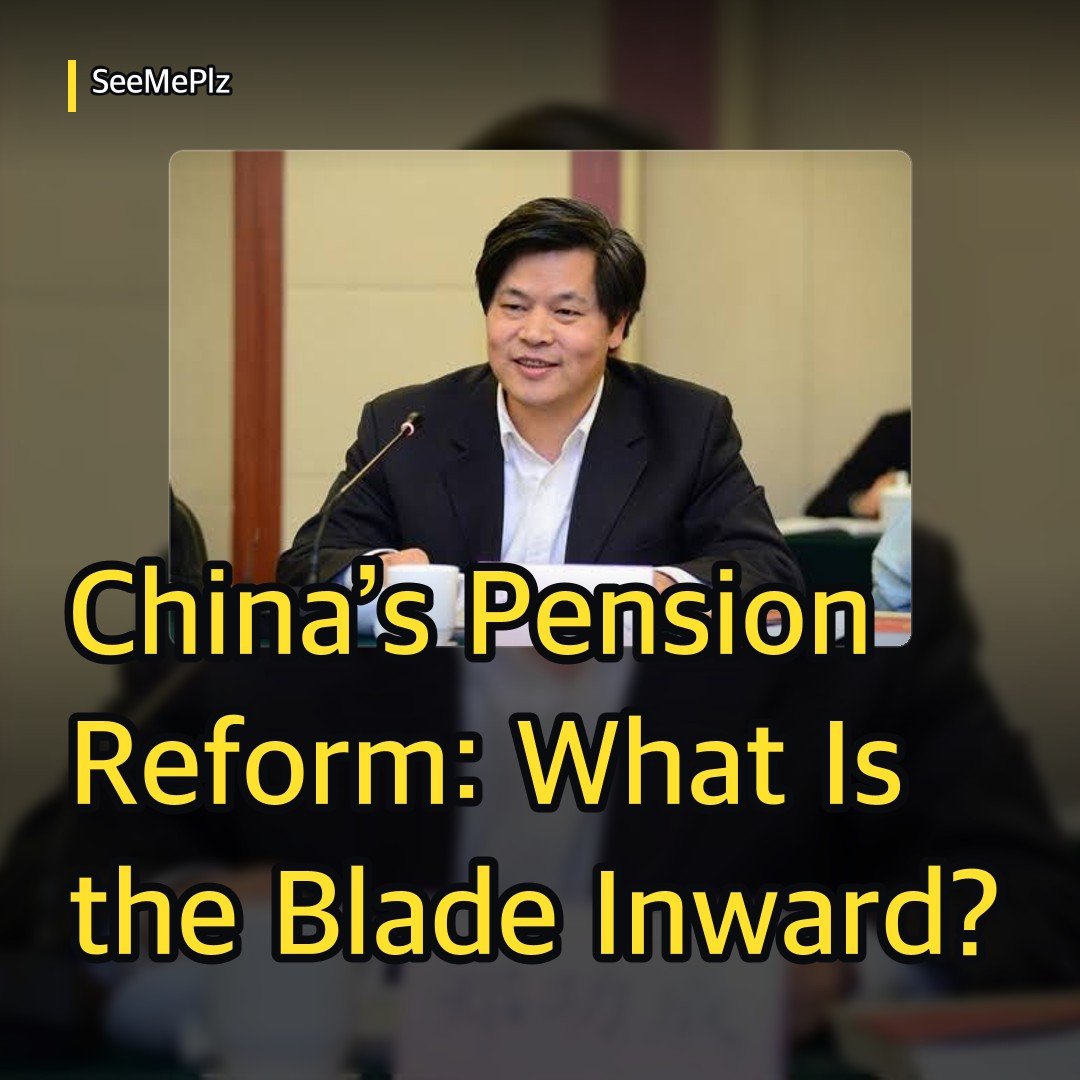
Social security and pension reform have become central topics of public discussion in China. Proposals shared by Zheng Gongcheng, founding president of the China Association of Social Security, highlight major structural challenges within the country’s public pension scheme. The overarching goal of these reforms is to address deep-seated inequalities between different social groups, aligning pension systems more closely with the principles of common prosperity.
The Fairness Gap: Government Versus Enterprise Retirees
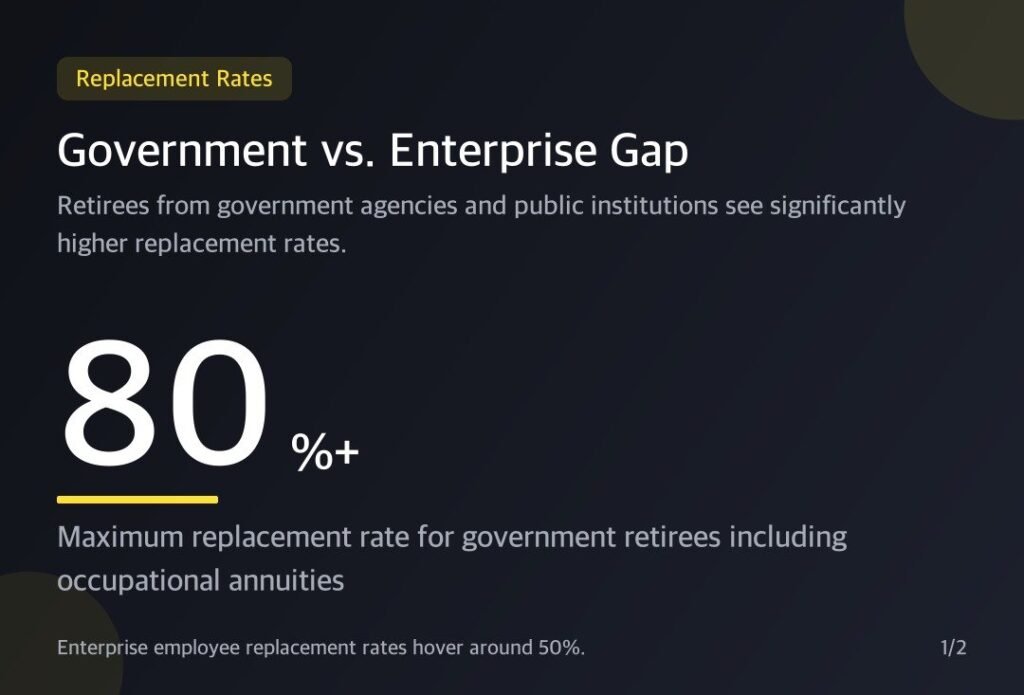
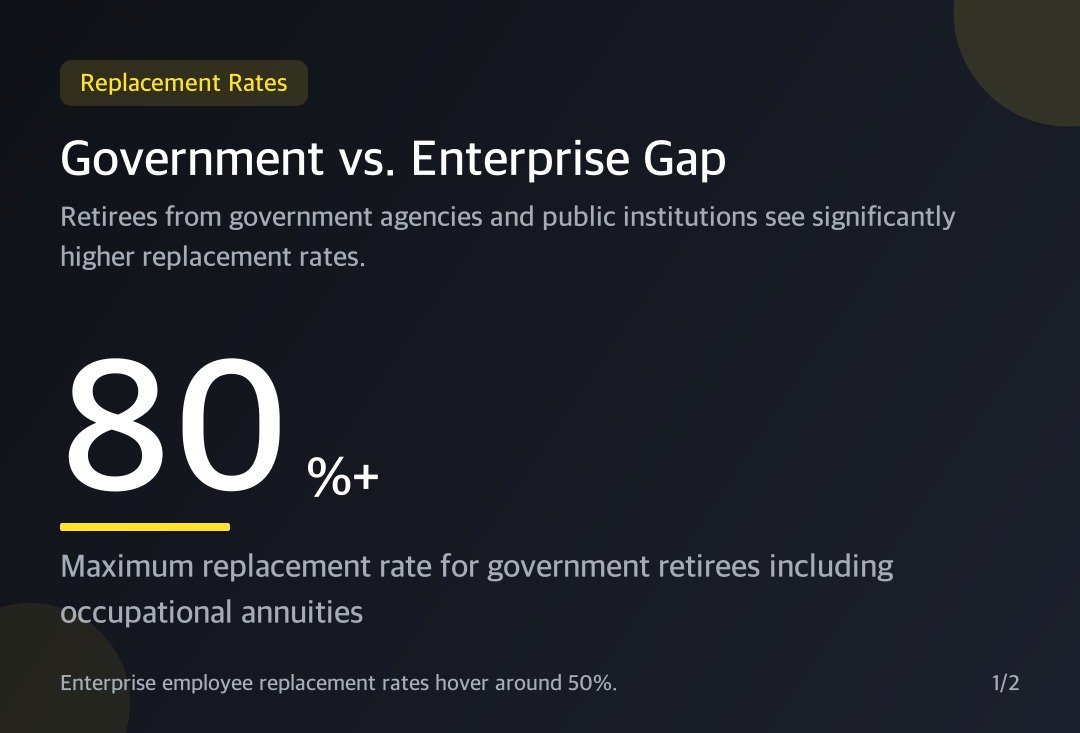
Public policy ultimately addresses who pays and who benefits. Currently, retirees from government agencies and public institutions enjoy significantly higher benefits compared to enterprise employees. When occupational annuities are stacked on top of basic pensions, the replacement rate for government and public institution retirees can exceed 80%, while the rate for enterprise employees sits at roughly 50%.
This discrepancy creates tension around public fairness. Furthermore, while the basic pension scheme for employees combines individual accounts with a social pooling component, the pooled portion operates essentially on pay-as-you-go financing—meaning today’s working population pays for today’s retirees—rather than acting as a static set of personal savings accounts.
Key Policy Proposals by Zheng Gongcheng
To tackle these disparities, expert proposals focus on several structural changes:
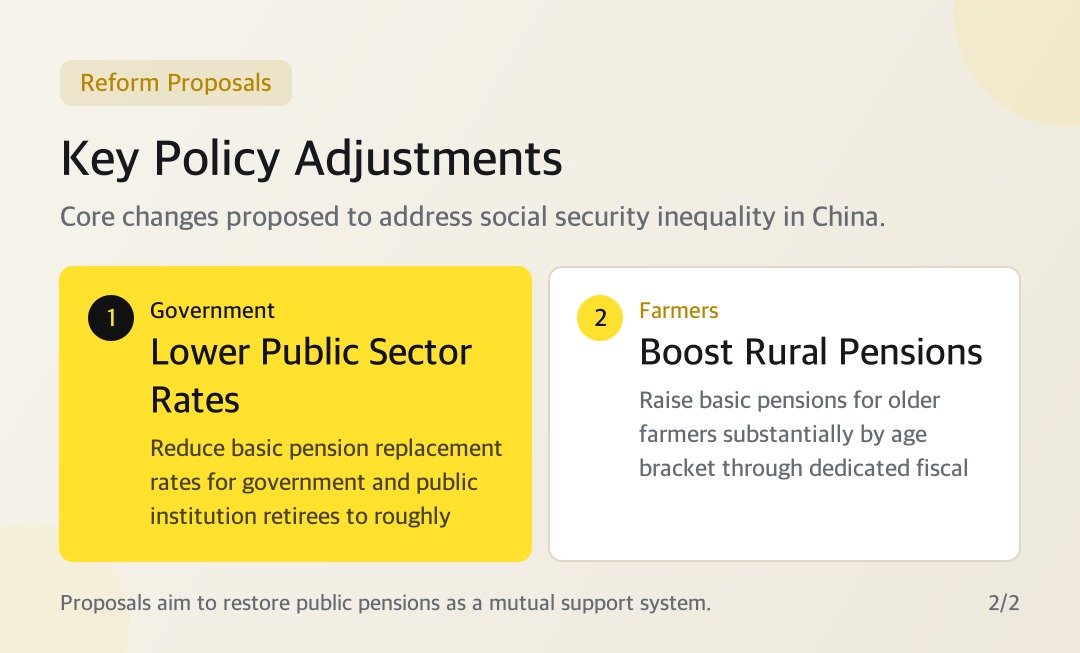
- Lowering Government Replacement Rates: Reduce the basic pension replacement rate for government and public institution retirees down to around 50% to narrow the gap with enterprise employees.
- Raising Farmers’ Pensions: Substantially increase pensions for older farmers by age bracket, funded through dedicated fiscal investments and state-owned asset transfers.
- Redefining Public Pensions: Re-establish public pensions as a system of mutual support, treating individual accounts as bookkeeping entries rather than private property and cutting their link to inheritance.
Common Prosperity and Social Security
Rooted in long-term policy frameworks, building a high-quality social security system is viewed as vital for promoting social fairness. As China advances through its development stages, optimizing the social security system involves reshaping underlying principles, unifying systems, increasing investment, and strengthening the rule of law to ensure that the entire population shares in the fruits of national development.