What is Medicare’s WISeR Pilot Program?
The Centers for Medicare and Medicaid Services (CMS) launched the Wasteful and Inappropriate Service Reduction (WISeR) program as a mandatory prior authorization initiative. Designed for traditional Medicare, the program targets 41 low-value medical services across six pilot states with chronically high rates of these specific procedures: New Jersey, Ohio, Oklahoma, Texas, Arizona, and Washington.
Targeted procedures include nerve stimulation, steroid injections, back and neck surgery, skin substitutes, and select urologic and orthopedic procedures. While these treatments are categorized as low-value care, some individual patients may still benefit from them under specific clinical circumstances.
Impact of AI-Enabled Prior Authorization on Service Utilization
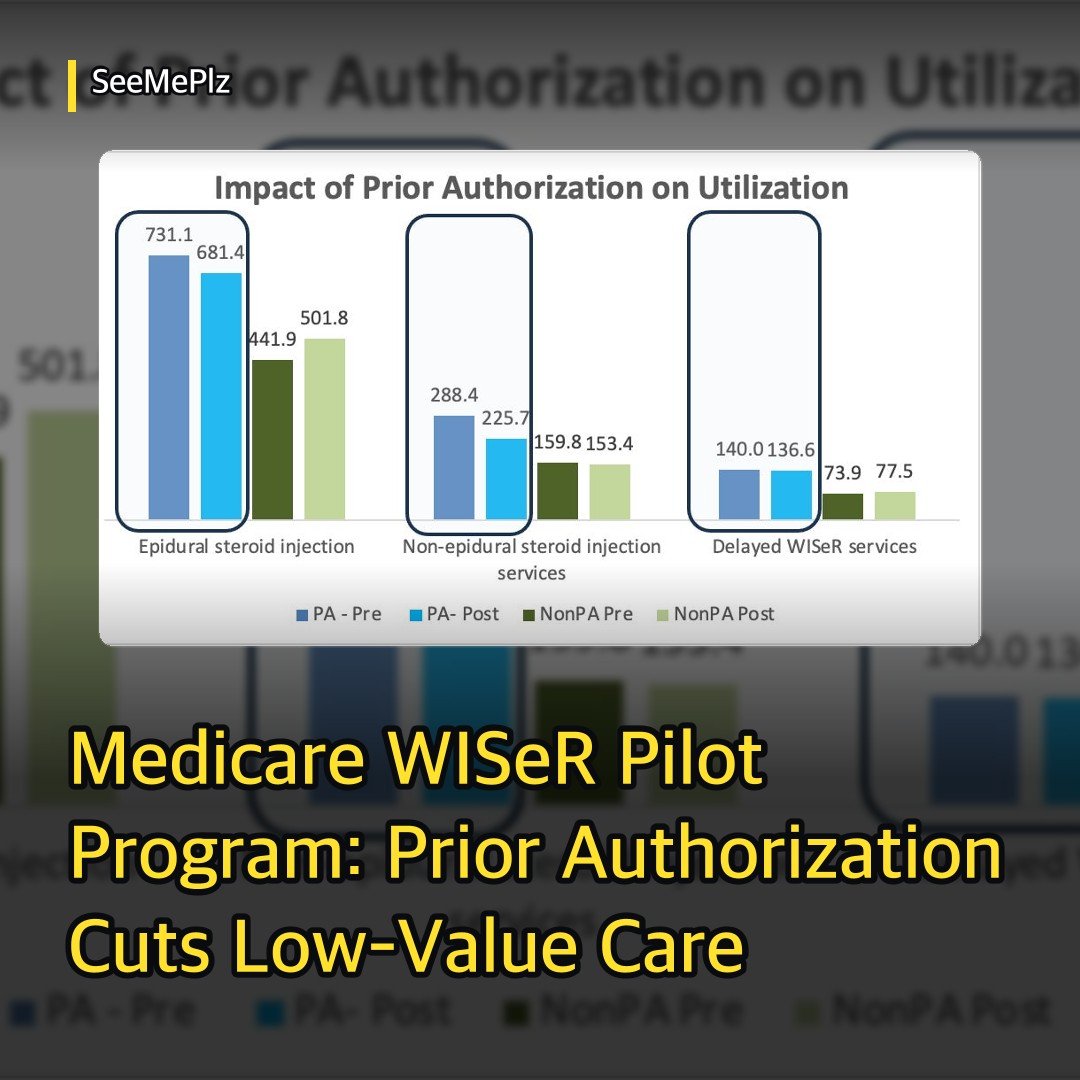
Recent research published in JAMA by researchers HT Neprash and ML Barnett examined electronic health record data to evaluate whether the WISeR program altered procedure rates in the six affected states compared to other states. The findings show that the program successfully drove a statistically significant decrease in the utilization of targeted low-value services:
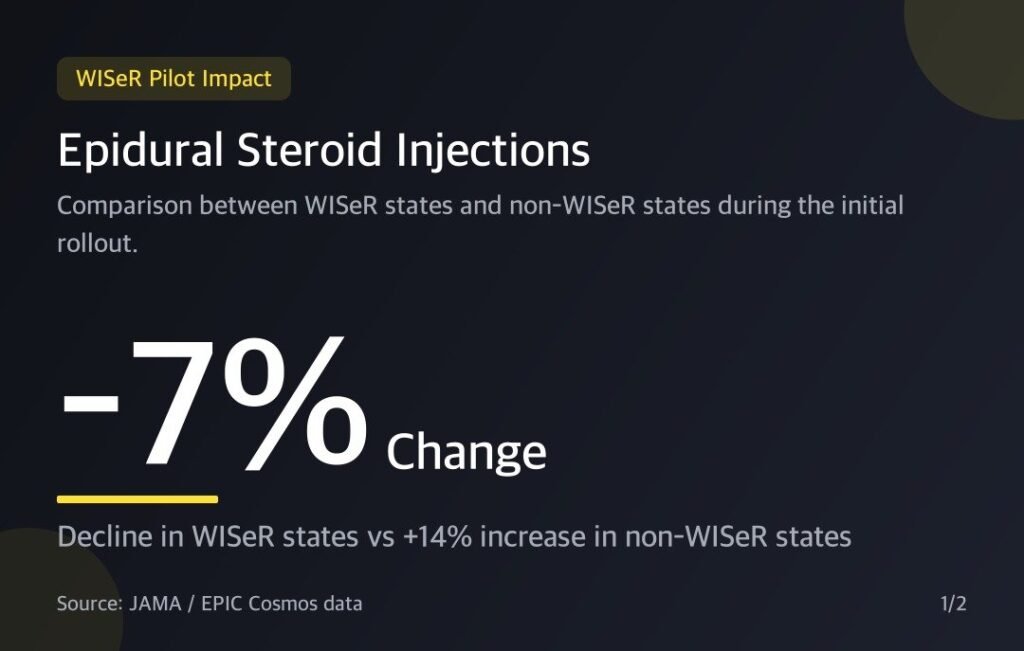
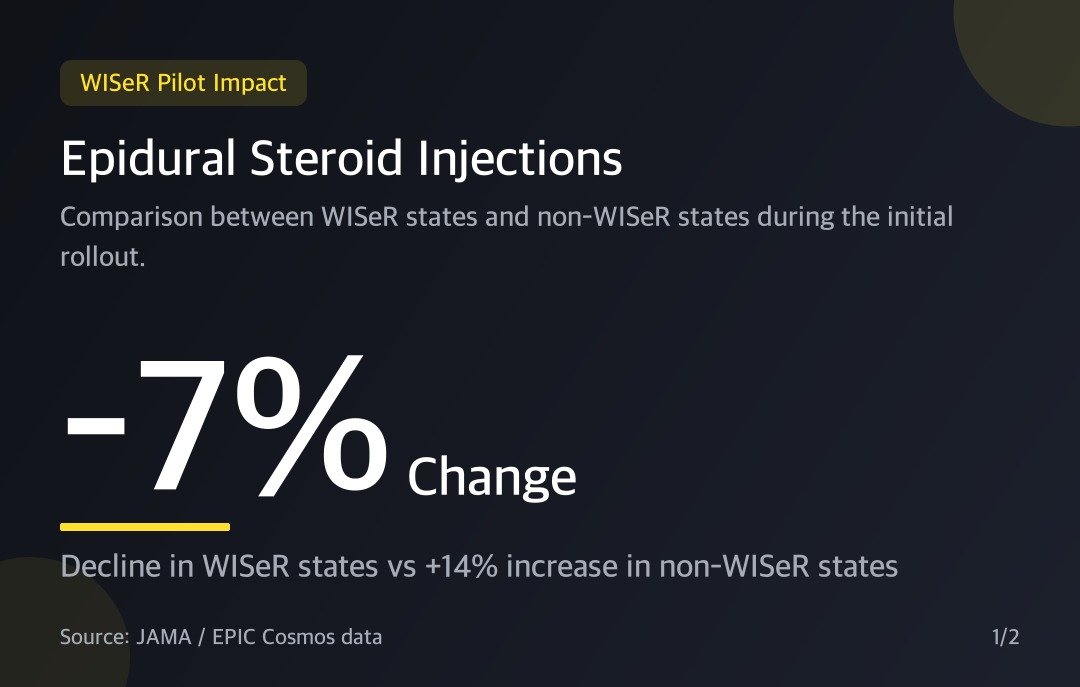
- Epidural steroid injections: Declined by 7% in WISeR states, compared to a 14% increase in non-WISeR states.
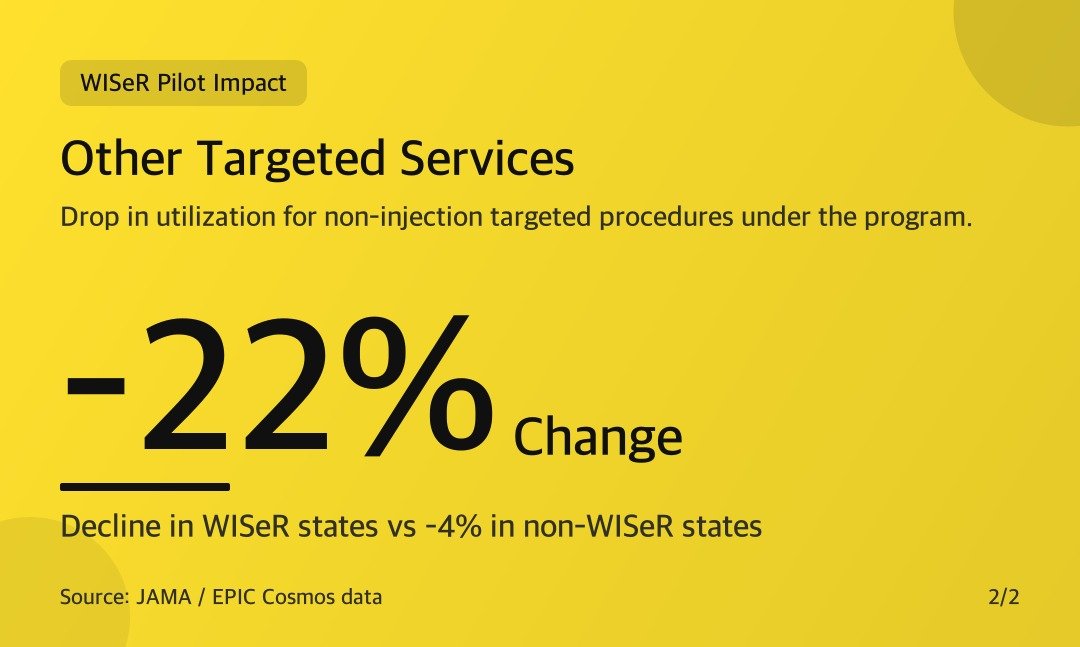
- Other WISeR services: Utilization dropped by 22% in pilot states, versus a 4% decline in non-WISeR states.
- Unimplemented services: Services originally slated for the program but never rolled out showed no significant change (a 2% decline in WISeR states compared to a 5% increase elsewhere), reinforcing that prior authorization directly drove the reduction.
Data from the EPIC Cosmos data warehouse further illustrates that during the first six months of the pilot, use of targeted services fell by about 15% for epidural steroid injections and roughly 20% for other targeted services in the six pilot states relative to other states. Untargeted services saw no significant change in utilization.
Challenges and Implementation Hurdles
The initial rollout of the WISeR program encountered significant friction. Healthcare providers reported that artificial intelligence platforms struggled to respond appropriately to authorization requests. Furthermore, policy experts expressed concern regarding financial structures that reward technology companies more heavily when denials increase.
Study authors also noted that the suppression effect of prior authorization tended to fade between the first and second quarters. Additionally, the data could not definitively determine whether the averted procedures would have been wasteful for every affected patient.
Implications for Employers and Healthcare Policy
For employers managing health plans, the study highlights that prior authorization effectively curtails service utilization over the short term. However, it also introduces substantial administrative friction and abrasion for both patients and physicians.
Public frustration regarding coverage denials remains high, and commercial health plans frequently face similar scrutiny. Decision-makers must carefully balance potential cost savings against patient and physician friction.
While prior authorization for elective procedures lacking clear efficacy can lower costs and protect patients from unnecessary side effects, managing the program requires addressing widespread operational and public relations challenges. Meanwhile, legislative bodies, such as the House Democratic Healthcare Cost of Living Task Force, have recommended eliminating the program altogether.