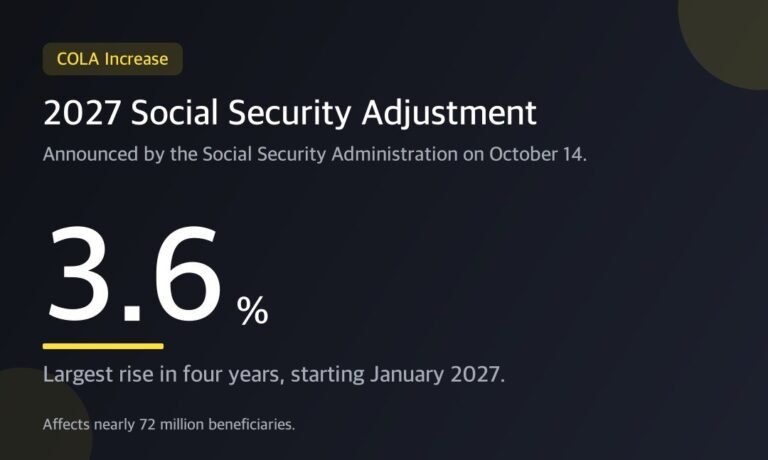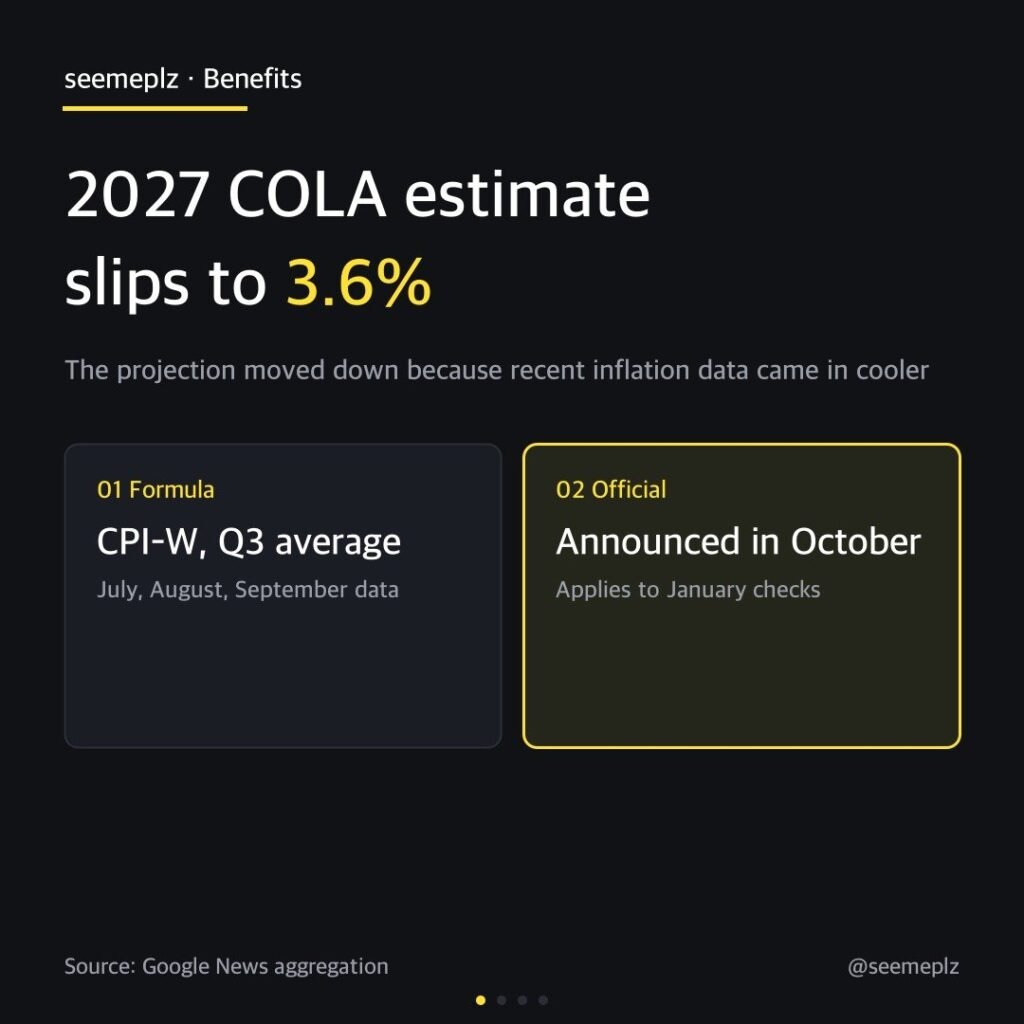

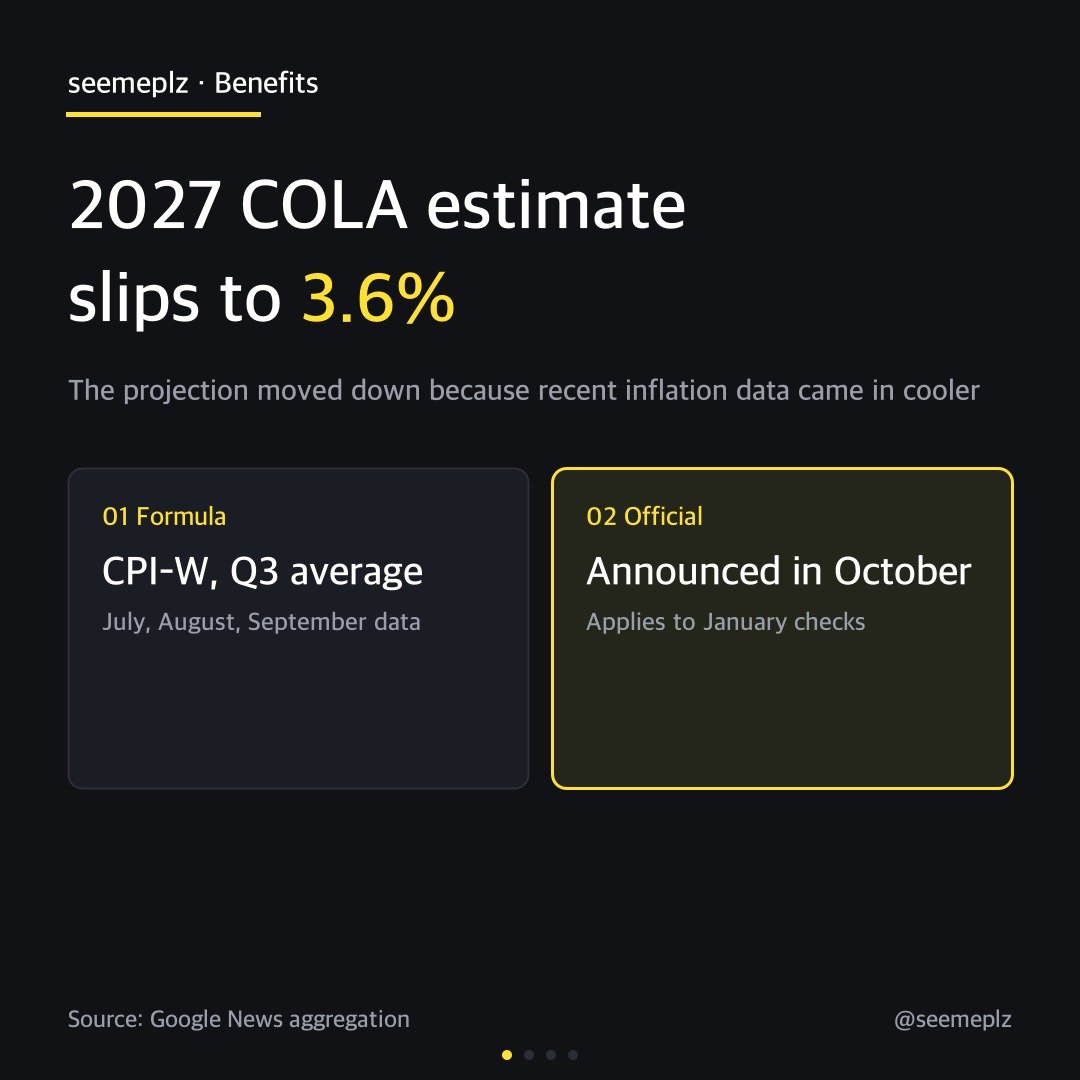
Projections for next year’s Social Security cost-of-living adjustment have moved again, sliding from an earlier estimate of 3.8% down to roughly 3.6%. If you receive a monthly benefit, that shift is worth understanding — not because the difference is dramatic, but because the reason behind it tells you more than the number itself.
Here is what changed, how the figure is actually produced, and what it means for the checks that arrive in January.
The COLA is not a decision. It is a calculation.
A common misunderstanding is that someone at the Social Security Administration decides how generous the annual raise should be. No one does. The cost-of-living adjustment is the output of a formula written into law, and the agency simply reports the result.
The input is a specific inflation measure: the Consumer Price Index for Urban Wage Earners and Clerical Workers, usually shortened to CPI-W. The Bureau of Labor Statistics publishes it monthly. The COLA compares the average CPI-W reading for July, August, and September of the current year against the same three-month average from the previous year. If the newer average is higher, the percentage increase becomes the COLA. If it is not higher, there is no adjustment at all.
That is the entire mechanism. It explains why estimates published in spring or midsummer are always provisional. Until the September figure is released in October, every number circulating is a forecast built on partial data.
Why the estimate moved down
An estimate that drops from 3.8% to 3.6% is telling you that recent inflation readings came in softer than the earlier forecast assumed. Two or three months of cooler price data are enough to move the projection by a couple of tenths of a percentage point.
This is normal. Forecasts of the COLA typically bounce within a range through the summer and settle only when the third-quarter data is complete. A downward revision is not a policy change, a benefit cut, or a sign that anything unusual is happening inside the program. It is a reflection of what prices did.
There is a second point worth making. Because the formula uses a three-month window rather than a full-year average, the COLA can differ noticeably from the inflation rate you see in headlines. A single volatile month — a swing in gasoline prices, for instance — carries more weight in the COLA calculation than it does in an annual average.
What a smaller COLA does to your check
The practical effect depends entirely on the size of your benefit. The adjustment is a percentage, so it scales.
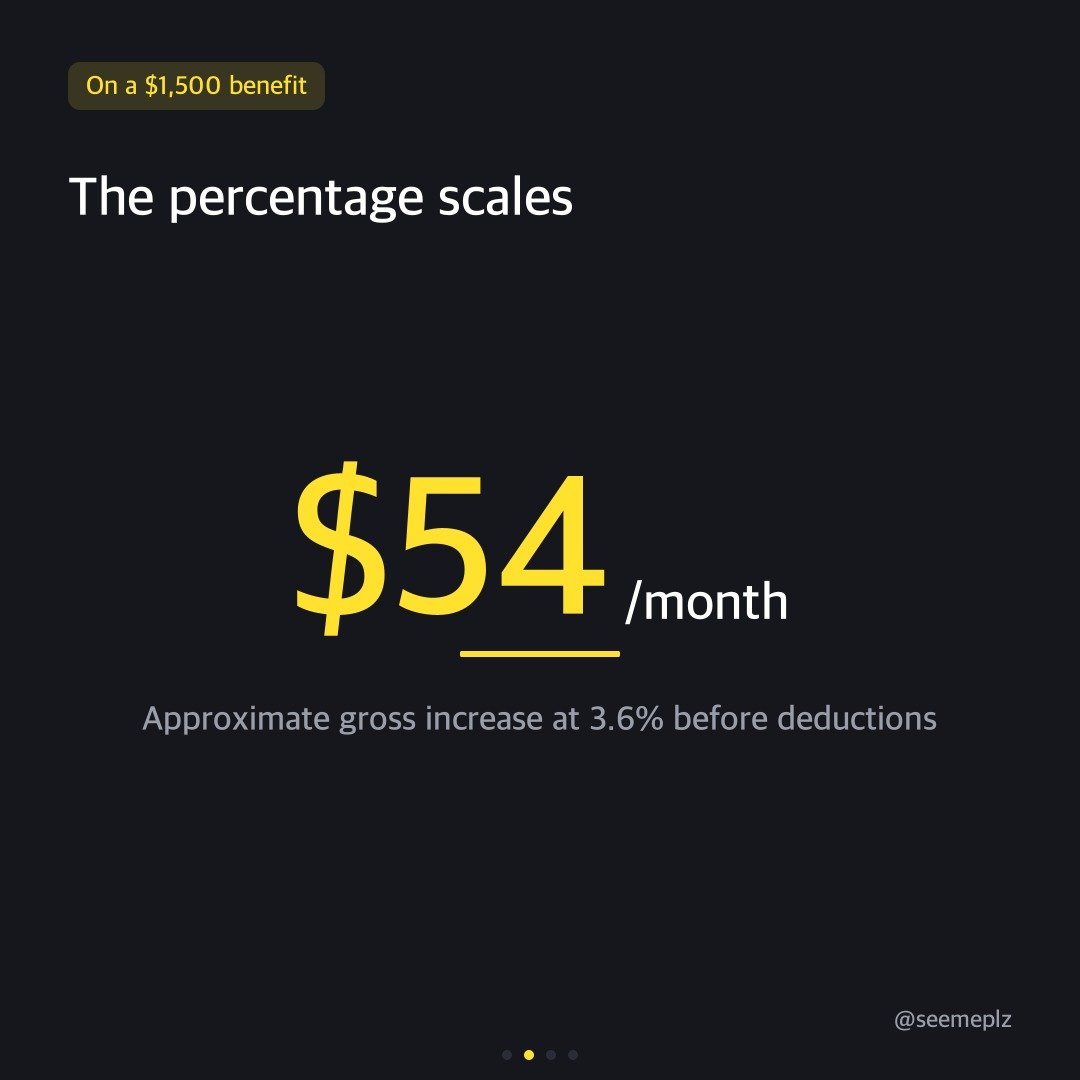
The arithmetic is straightforward. Multiply your current gross monthly benefit by the adjustment. A 3.6% increase on a $1,500 monthly benefit adds about $54 per month before deductions. On a $2,500 benefit, it adds about $90. The difference between 3.8% and 3.6% on that same $1,500 benefit is roughly $3 a month — real, but not the part of the equation that will determine your budget next year.
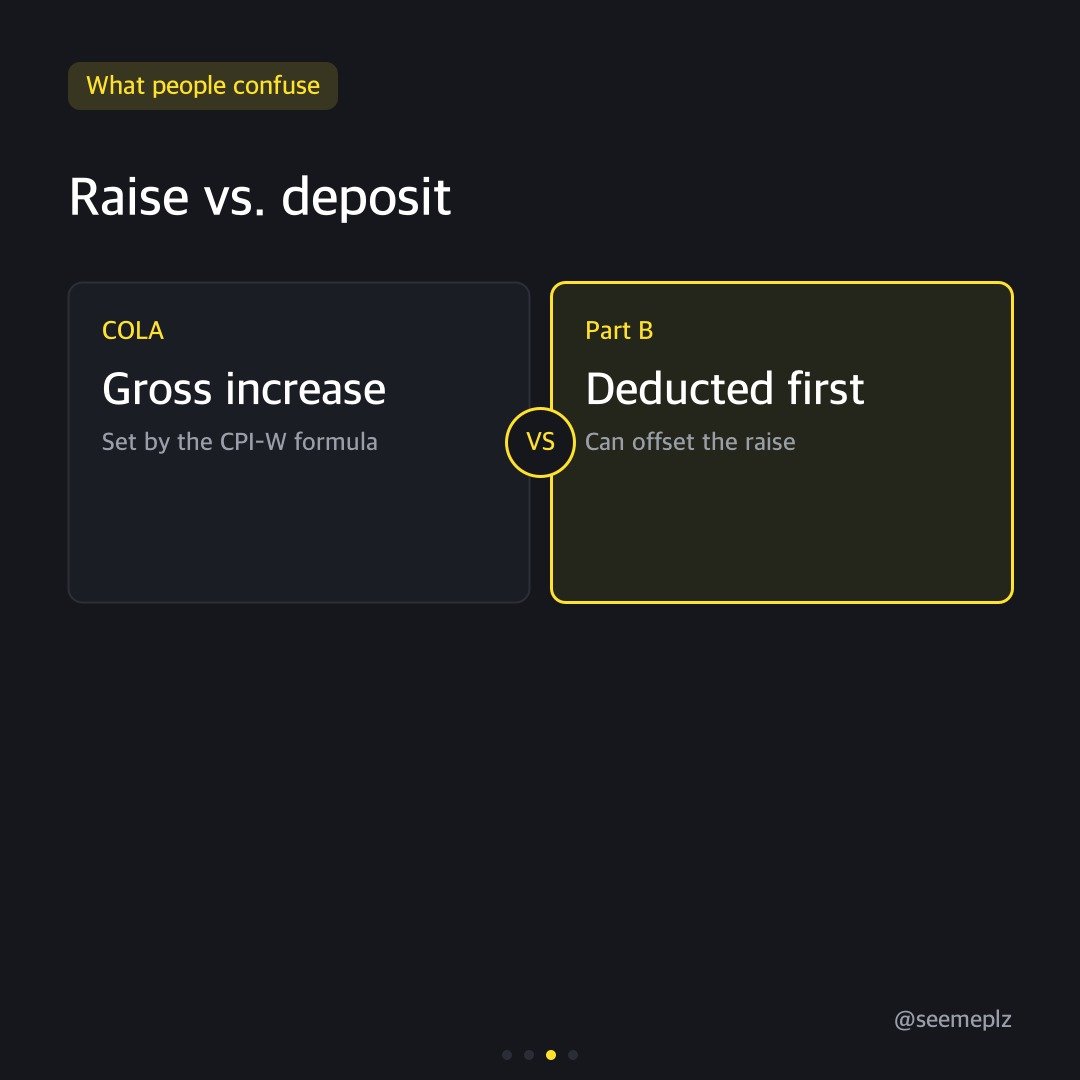
The larger factor is what happens to Medicare Part B premiums, which are deducted directly from most Social Security payments. If the Part B premium rises by more than the dollar value of your COLA, your net deposit can stay flat or even fall despite a nominal raise. This is the single most common source of confusion each January, and it is why the announced COLA percentage and the number that shows up in your bank account often feel disconnected.
The hold harmless provision, briefly
Federal law includes a protection often called the hold harmless provision. In general terms, it prevents an increase in the standard Medicare Part B premium from reducing the dollar amount of your Social Security benefit. If the premium increase would exceed your COLA, the premium increase is limited so your net benefit does not go down.
There are exceptions. The provision does not apply to everyone — notably, it generally does not protect people who are new to Medicare, those who pay income-related monthly adjustment amounts because of higher income, or those whose premiums are paid by a state Medicaid program. If you fall into one of those categories, it is worth checking your specific situation rather than assuming the protection applies.
When the number becomes official
The Social Security Administration announces the official COLA in October, after the September CPI-W figure is published. The adjustment then applies to benefits payable for December, which most beneficiaries receive in January.
Around the same time, the agency mails and posts benefit verification information showing your new monthly amount. If you have an online account, that figure typically appears there before the paper notice arrives.
Until that announcement, treat every published estimate as a forecast. Reputable groups that track the COLA update their projections monthly, and those projections have historically moved by several tenths of a point between spring and October.
What to do with this information now
There is no action required in response to a revised estimate. There are, however, a few things worth doing before the official announcement lands.
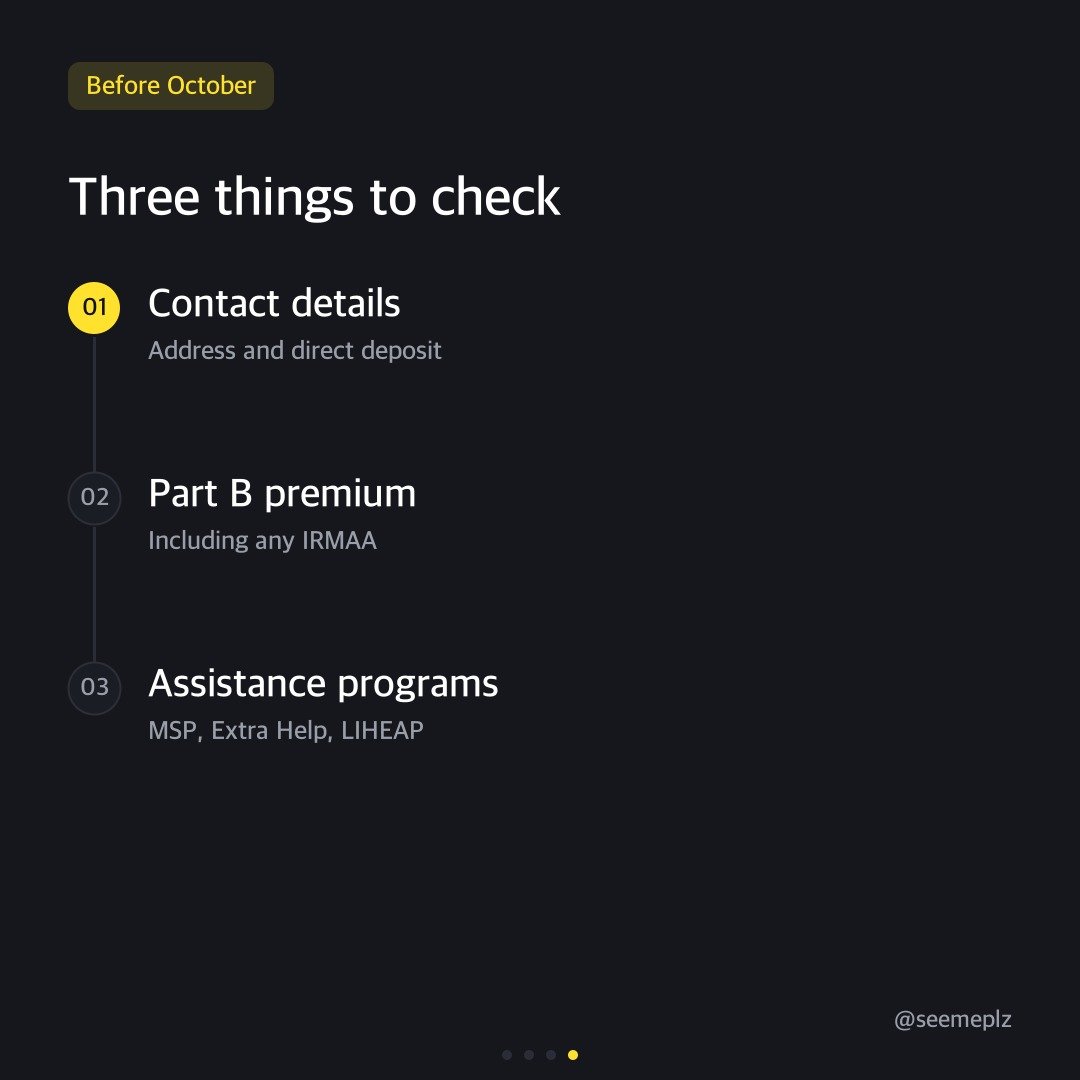
First, check whether your address and direct deposit details on file are current. The single most common reason a beneficiary misses a notice or a payment is stale contact information.
Second, if you are enrolled in Medicare, look at your current Part B premium and any income-related adjustment. Knowing that number in advance makes the January deposit far less surprising.
Third, if your budget is tight enough that a difference of a few dollars per month matters, that is a signal to look at the programs designed for exactly that situation — Medicare Savings Programs, Extra Help for prescription drug costs, and state-level utility and food assistance. Eligibility for several of these is tied to income thresholds that themselves adjust each year, so a benefit increase does not automatically disqualify you.
A note on how these numbers get reported
Coverage of the COLA tends to frame each revision as good news or bad news. It is neither. The adjustment exists to keep benefits roughly in line with prices. A smaller COLA generally means prices rose more slowly, which affects your costs as well as your income.
The more useful question is not whether the percentage is high or low, but whether the index used — CPI-W, which weights the spending patterns of working-age wage earners — reflects what retirees actually spend money on. Housing and medical care make up a larger share of older households’ budgets than the CPI-W weighting suggests, which is the basis for the long-running policy argument that a different index would be more appropriate. That debate has been active for years and has not changed the formula.
The short version
The 2027 COLA estimate has drifted from 3.8% to 3.6% because recent inflation data came in cooler than earlier assumptions. The final figure will not be known until October, when third-quarter CPI-W data is complete. Whatever that number turns out to be, the amount that actually reaches your account depends just as much on the Medicare Part B premium set for the same year.
If you want one thing to watch between now and October, watch the Part B premium announcement. That is the number with the most influence over what changes in January.
How the COLA interacts with taxes
A raise can have a side effect that catches people off guard: it can increase the portion of your benefit subject to federal income tax.
Social Security benefits become partially taxable once your combined income — adjusted gross income, plus nontaxable interest, plus half of your Social Security benefits — exceeds certain thresholds. Those thresholds are fixed in statute and are not indexed to inflation. They have not moved in decades.
That detail has a compounding effect. Every year the COLA raises benefits, a slightly larger share of beneficiaries crosses those static thresholds. It is not a policy anyone actively chose each year; it is the arithmetic of an unindexed threshold meeting an indexed benefit.
If your income sits near a threshold, a smaller COLA can incidentally keep you below it for another year. That is a narrow silver lining, and it is worth checking with whoever prepares your return rather than assuming.
The COLA and other benefit programs
Social Security is not the only program that adjusts. Supplemental Security Income uses the same COLA percentage, so SSI recipients see the identical adjustment applied to the federal benefit rate.
Several other programs use different mechanisms and different timing. Veterans disability compensation follows its own statutory adjustment, which has historically tracked the Social Security COLA. Federal civilian and military retirement systems use related but distinct calculations, which is why the projected figures for CSRS, FERS, and Social Security are often reported together and are often not identical.
If you receive income from more than one of these systems, expect the adjustments to arrive on different schedules and in different amounts. Budget from the smallest confirmed figure rather than the largest projected one.
Watching the right indicators
If you want to track where the COLA is heading before October, there are only two numbers that matter: the monthly CPI-W readings for July, August, and September. Everything else is commentary.
The Bureau of Labor Statistics publishes each month’s CPI data in the middle of the following month, meaning the September figure — the last input — arrives in October. Once all three are published, the COLA is arithmetic, not forecast. Any estimate published before that point is an educated guess about data that has not been collected yet.
Source: Google News aggregation of Social Security COLA coverage