
Choosing between Medicare Advantage (Medicare Part C) and Traditional Medicare is one of the most critical health decisions aging adults and their families face. While both programs deliver essential healthcare coverage, their costs, doctor networks, and rules differ significantly.
Understanding these key differences helps ensure you select a plan that fits your healthcare needs and household budget.
Budget and Chronic Disease Considerations
When evaluating Medicare coverage, your current budget and personal health history should be your starting point.
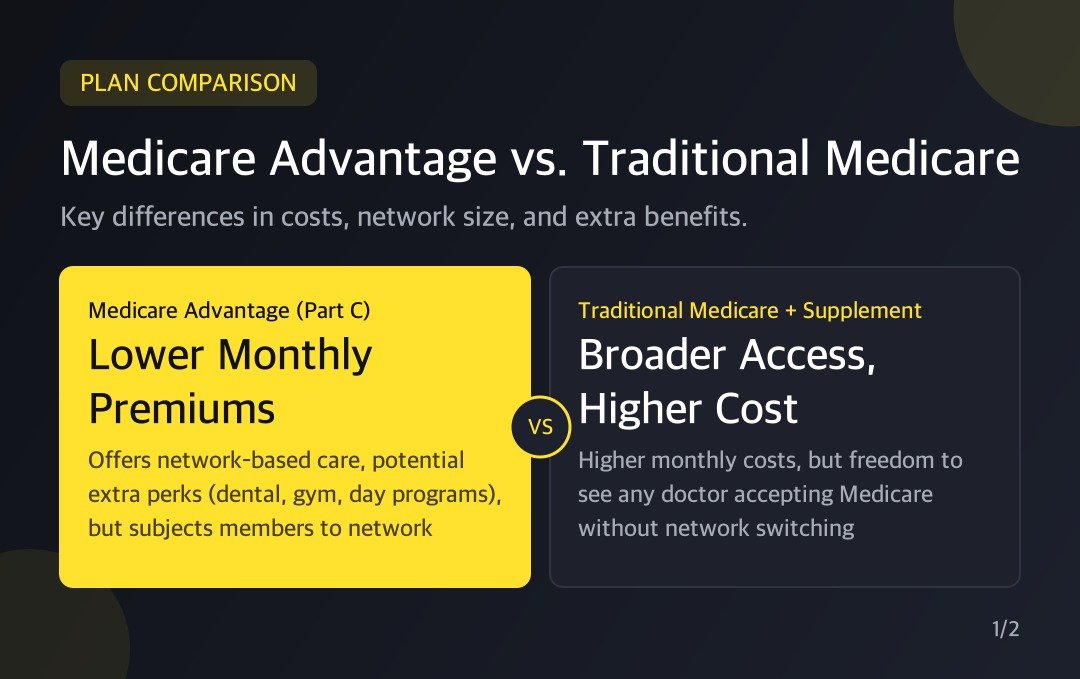
- Monthly Premiums: Medicare Advantage plans generally offer lower upfront monthly costs. Traditional Medicare paired with a Medicare Supplemental plan (Medigap) typically incurs higher monthly expenses.
- Family Health History: Managing chronic conditions like Alzheimer’s or Parkinson’s disease can become very costly. Evaluating your long-term health outlook helps determine whether lower monthly premiums outweigh potential out-of-pocket care costs.
Doctor Networks and State-Level Variations
Unlike Traditional Medicare, which allows you to see almost any provider nationwide, Medicare Advantage plans rely on specific doctor networks.
- Confirming Provider Participation: Before choosing a plan, verify whether your primary care doctors and specialists accept the specific Medicare Advantage plan and whether they have stayed in the network consistently.
- State Network Differences: In certain states, Medicare Advantage networks are extensive enough that access feels almost identical to Traditional Medicare. In other areas, network boundaries may be significantly narrower.
- Special Benefits: Some Medicare Advantage plans offer specialized services such as adult day programs with meals, occupational therapy, physical therapy, and caregiver support. Perks may also include gym memberships (such as SilverSneakers), dental care, transportation, or wearable health devices.
Expert Note: If you are chronically ill, Medicare Advantage may not always be the most cost-effective option due to network limitations and out-of-pocket care management costs.
The Crucial 12-Month Guaranteed Enrollment Window
One of the most overlooked rules in Medicare is the initial guaranteed enrollment opportunity.
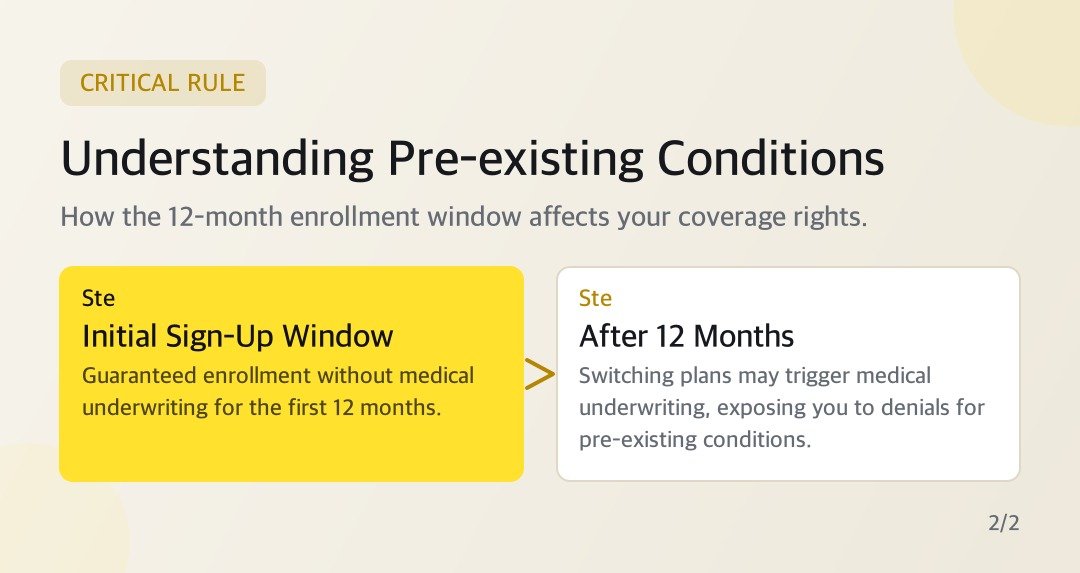
When you first sign up for Medicare (whether through Traditional Medicare or a Medicare Advantage plan), you are granted a one-time window where pre-existing conditions cannot be used to deny you coverage or raise your costs.
- 12-Month Limit: This guaranteed right without medical underwriting lasts for 12 months after your initial signup.
- Medical Underwriting After 12 Months: After this 12-month window closes, switching back to Traditional Medicare from Medicare Advantage means supplemental plan (Medigap) insurers can require medical underwriting. If you have pre-existing conditions, private insurers can deny you supplemental coverage.
Getting Expert Guidance for Your Plan Search
Selecting the right Medicare coverage requires personalized advice. Family members within the same household often require different plans based on their unique prescription medications and health needs.
Where to Get Assistance
- Licensed Medicare Insurance Brokers: Specialists who evaluate changing plan details each year.
- Volunteer Counseling Networks: State-specific assistance programs, such as HICAP in California, staffed by trained retirees and medical field veterans who guide applicants through enrollment.
When seeking assistance, always confirm whether your broker or volunteer counselor will remain available throughout the year to help resolve billing or coverage challenges.