
Choosing between Medicare Advantage (Medicare Part C) and Traditional Medicare is one of the most critical health coverage decisions for older adults and families. While both options provide essential health benefits, their costs, provider networks, extra perks, and rules regarding pre-existing conditions differ significantly.
Here is a detailed breakdown of how to evaluate your budget, family health history, and provider networks to select the best plan for your needs.
1. Upfront Costs vs. Long-Term Expenses
When comparing plans, your current budget and long-term medical needs should be the primary factors:
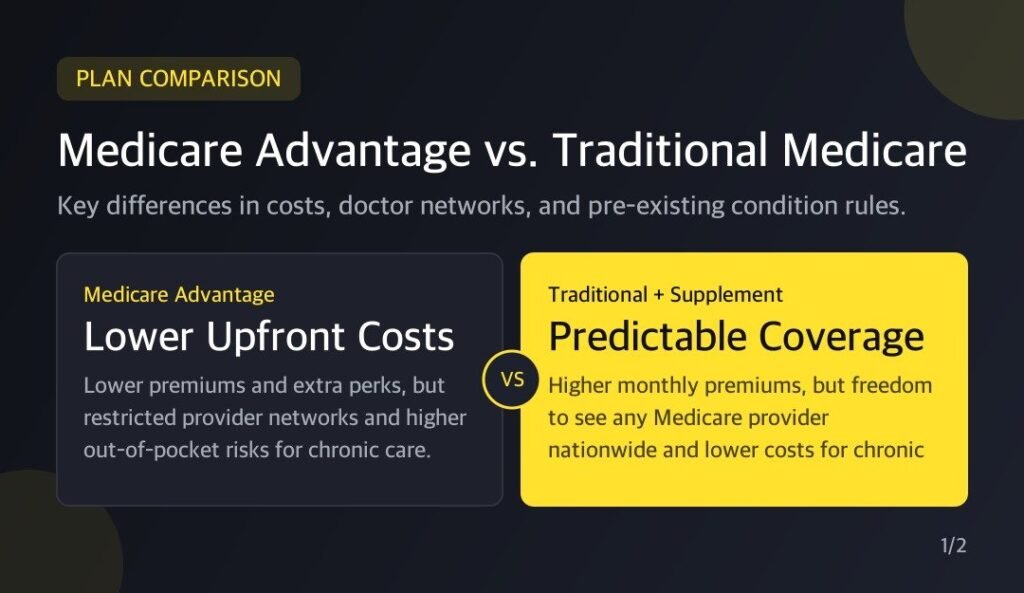
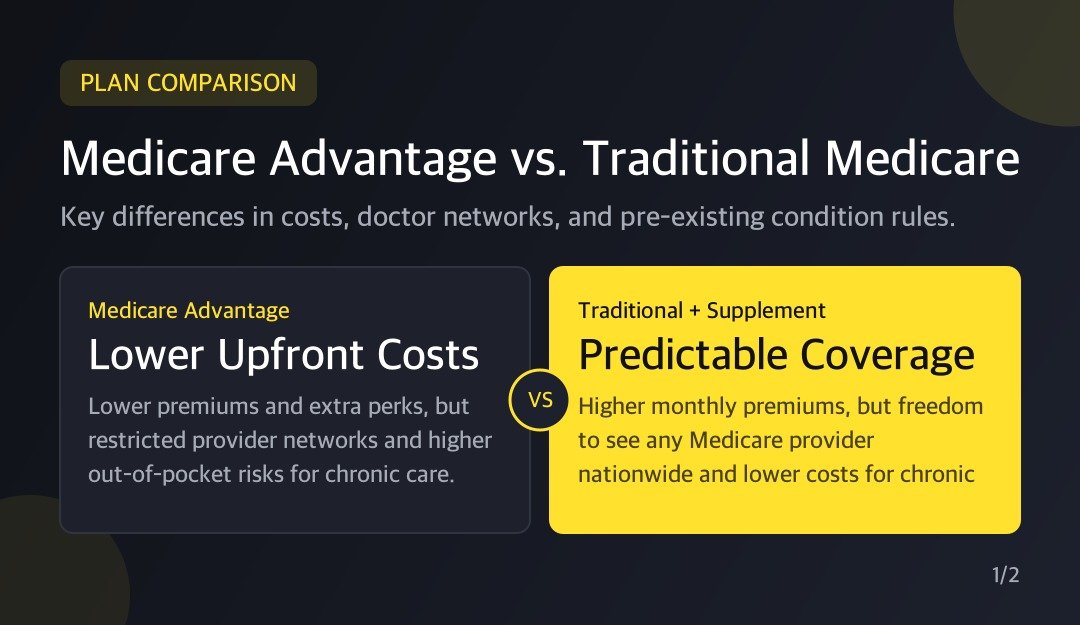
- Medicare Advantage (Part C): Typically features lower monthly premiums upfront. However, if you develop chronic conditions, managing care under an Advantage plan can become expensive.
- Traditional Medicare: Pairs with a Medicare Supplemental (Medigap) policy. While the monthly supplemental plan premium is higher, it provides predictable out-of-pocket costs and eliminates network restrictions.
If you have a strong family history of chronic diseases—such as Alzheimer’s or Parkinson’s disease—a supplemental plan with Traditional Medicare may provide better long-term financial protection despite higher monthly fees.
2. Doctor Networks and Regional Availability
Provider access varies depending on your plan selection and geographic location:
- Doctor Continuity: Always confirm that your personal physicians accept the Medicare Advantage plan you are considering and that they have a history of remaining in that network.
- State Network Size: Network coverage varies by state. In some states, Medicare Advantage plans have networks so extensive that they function almost identically to Traditional Medicare. In other regions, networks are significantly restricted.
- Caregiver Support & Day Programs: Certain Medicare Advantage plans offer specialized benefits, including adult day programs with meals, physical therapy (PT), occupational therapy (OT), and caregiver respite support.
3. The 12-Month Pre-Existing Condition Rule
One of the most critical—and often overlooked—enrollment rules involves medical underwriting:
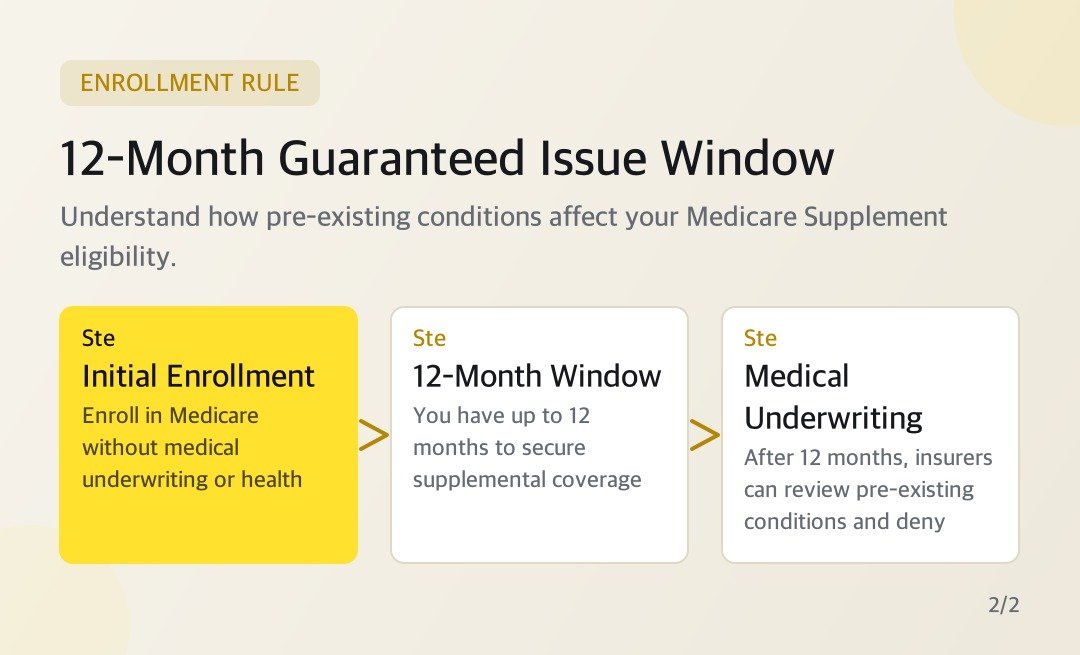
- Guaranteed Issue Window: When you first enroll in Medicare, you have a one-time opportunity to sign up without being screened for pre-existing medical conditions.
- The 12-Month Limit: After 12 months, switching back to Traditional Medicare and applying for a supplemental insurance policy subjects you to medical underwriting.
- Risk of Denial: If you attempt to sign up for supplemental insurance after this window and have pre-existing health conditions, insurers can deny you coverage.
4. Comparing Plan Perks
Extra features, or "perks," differ greatly across plan structures:
| Plan Type | Common Perks & Features |
|---|---|
| Medicare Advantage | May include fitness programs (e.g., SilverSneakers), wearable tracking devices, dental care, or transportation services. |
| Traditional Medicare + Supplement | Covers care from any provider accepting Medicare nationwide without network restriction complications. |
Because plan quality and extra benefits vary widely, choices should be evaluated individually. Spouses living in the same household often require different coverage choices depending on their unique health profiles.
5. Where to Get Free & Professional Guidance
To navigate choices effectively, build an aging advisory team before making a final selection:
- Licensed Medicare Brokers: Professional insurance specialists who can review prescription drug lists and coverage changes annually.
- State Health Insurance Assistance Programs (SHIP): Volunteer counseling networks available nationwide. For example, California operates HICAP (Health Insurance Counseling and Advocacy Program), which utilizes trained community professionals and retirees to guide beneficiaries.
Before selecting a counselor or broker, confirm whether they offer ongoing support throughout the year when claims, coverage questions, or care challenges arise.