
Choosing between Medicare Part C (Medicare Advantage) and Traditional Medicare is one of the most critical financial and healthcare decisions for American seniors and family caregivers. While both options deliver essential health coverage, they handle costs, physician networks, and supplemental coverage in fundamentally different ways.
Understanding how these two paths differ—and knowing about a strict one-time enrollment window—can save you thousands of dollars and protect your access to trusted doctors.
Medicare Advantage vs. Traditional Medicare: Key Differences
When evaluating health plans, your monthly budget and long-term health history should drive your decision.
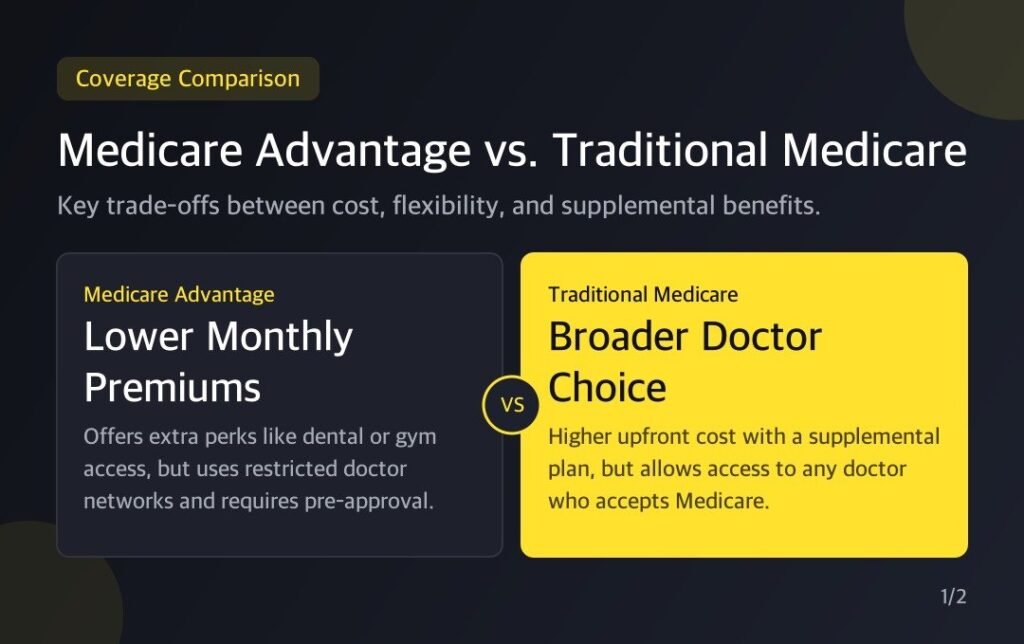
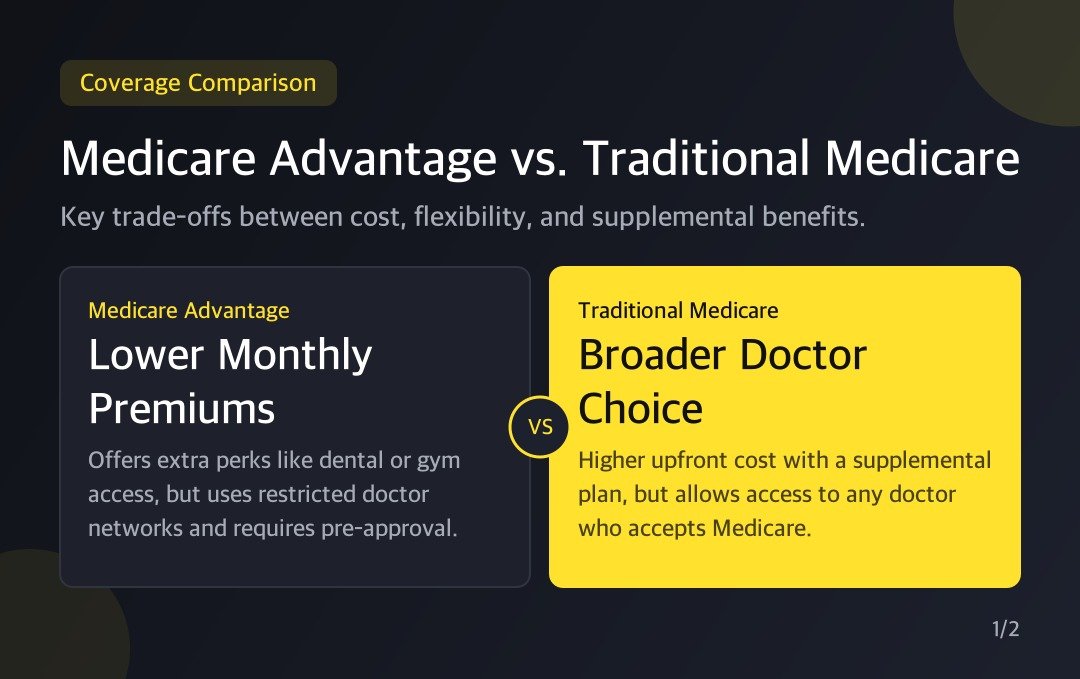
- Medicare Advantage (Part C): Typically features lower monthly premiums upfront. Many plans include extra perks such as gym memberships (like SilverSneakers), smartwatches, dental coverage, transportation, or adult day care programs with meals and therapy visits.
- Traditional Medicare: Generally requires a higher monthly outlay if paired with a supplemental plan (Medigap), but offers open access to providers without network restrictions.
While Medicare Advantage plans may look more affordable initially, they are not a one-size-fits-all solution. For individuals managing severe or expensive chronic conditions—such as Alzheimer’s disease or Parkinson’s disease—Traditional Medicare with supplemental insurance often provides more predictable, hassle-free coverage.
Doctor Networks and State-by-State Differences
Before enrolling in a Medicare Advantage plan, you must confirm whether your current healthcare providers participate in the plan’s network—and whether they have a history of staying in that network.
- Network Stability: Switching plans because a doctor drops out of a network can cause you to lose your preferred provider.
- State Variations: Network size varies dramatically depending on where you live. In some states, a Medicare Advantage plan network is so large that it functions almost like Traditional Medicare. In other areas, networks are far more restricted.
The Critical 12-Month Preexisting Condition Rule
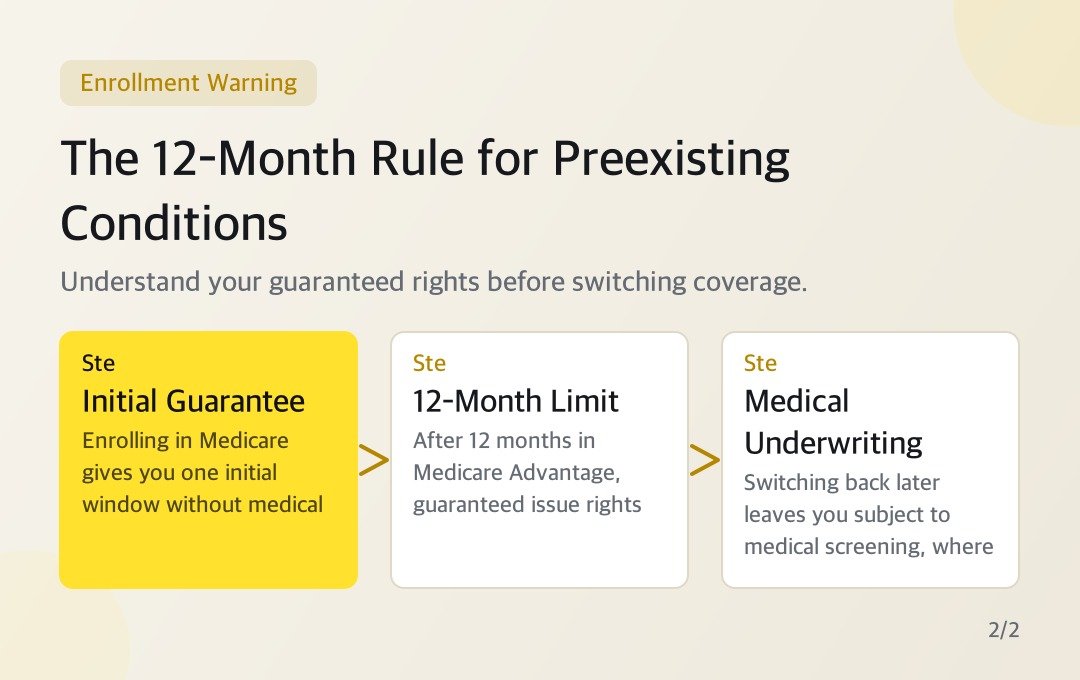
One of the most overlooked rules in Medicare enrollment involves your single opportunity to secure coverage without medical underwriting.
When you first sign up for Medicare, you get a one-time enrollment window where you cannot be screened or denied for preexisting conditions. However, if you choose a Medicare Advantage plan and decide to switch back to Traditional Medicare later, that initial window closes after 12 months.
After 12 months, returning to Traditional Medicare subjects you to medical underwriting. If you have chronic illnesses or preexisting conditions, private insurers can deny you a Medicare supplemental insurance policy (Medigap). You will still receive standard Traditional Medicare, but you may be forced to pay out-of-pocket costs without supplemental coverage.
How to Build Your Medicare Support Team
Navigating plan updates requires yearly attention because plan details, formulary lists, and doctor networks change even if your personal health or medications do not. Spouses often require different plans based on their individual health profiles.
To find the right coverage, consider working with reliable local experts:
- Licensed Medicare Insurance Brokers: Work with specialists who evaluate your plan annually to ensure it matches your ongoing health needs.
- Volunteer Counseling Networks: Programs such as HICAP (Health Insurance Counseling and Advocacy Program in California) utilize trained retirees and former medical staff to guide beneficiaries through choices without sales pressure.
- Key Question to Ask: Always ask counselors or brokers if they will remain available to support you throughout the plan year when claims or coverage challenges arise, rather than just during initial sign-up.