
Understanding the Two-Year Lag for Medicare IRMAA Surcharges
When planning for retirement, making a large Roth conversion from a pretax 401(k) often feels like a smart move to manage future tax brackets. However, retirees frequently overlook how these financial moves interact with Medicare.
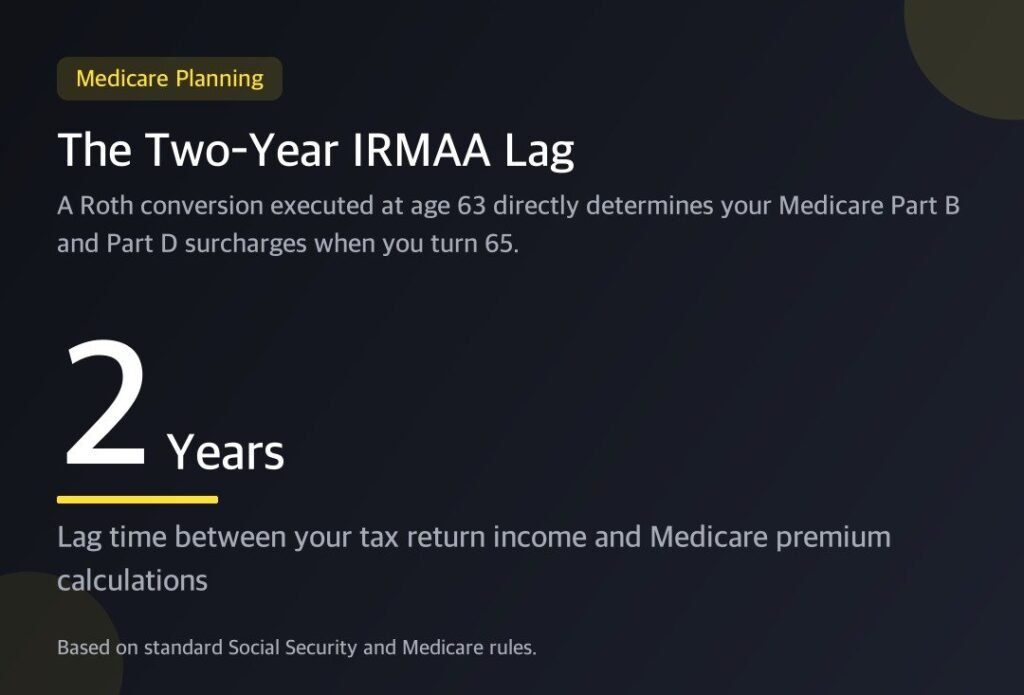
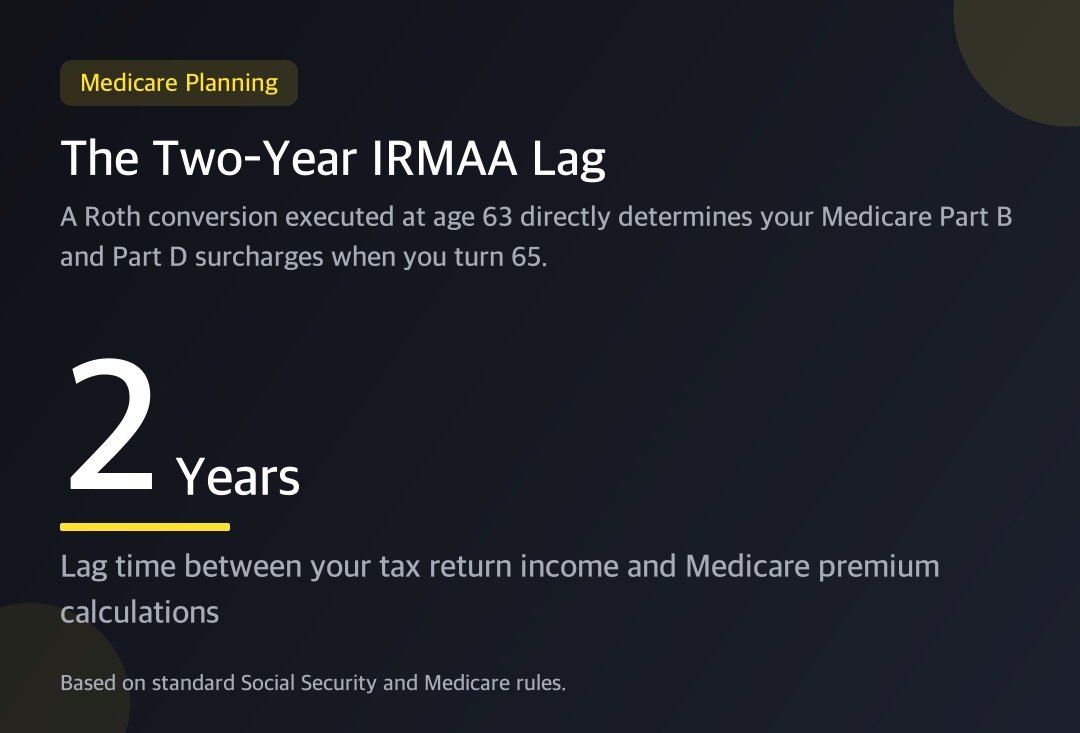
Medicare’s income-related monthly adjustment amounts—commonly known as IRMAA—operate on a strict two-year lag. This means that the income you report on your tax return today directly determines your Medicare Part B and Part D premiums two years down the road.
How MAGI Affects Your Medicare Premiums at Age 65
Medicare uses your Modified Adjusted Gross Income (MAGI) to calculate whether you will face surcharges. Every single taxable dollar that you withdraw or convert from a pretax 401(k) enters your adjusted gross income.
- No Protection from Deductions: Standard deductions and the enhanced senior deduction available at age 65 lower your federal income tax bill, but they offer zero protection against Medicare surcharges. These deductions are applied after MAGI is already calculated.
- Asset Shifts Do Not Hide Income: Parking cash in municipal bonds or shifting money around inside accounts does not keep you off Medicare’s radar if the underlying income was triggered during conversion.
Strategic Ways to Manage 401(k) Conversions
Because a conversion completed at age 63 feeds into the premium calculation for age 65, timing is everything. Rushing into a single large conversion year can unintentionally spike your future health care costs.
- Spread Conversions Across Multiple Years: Instead of moving a massive chunk all at once, retirees often benefit from spreading conversions over several tax years.
- Watch the Thresholds: Keeping each year’s conversions stopping just below key MAGI thresholds—such as the $109,000 mark—helps prevent unexpected hikes in your monthly Medicare bills.
Careful planning around your pretax 401(k) ensures that your retirement income strategy does not backfire when your Medicare coverage officially begins.