Medicare Part A Backdating and HSA Penalties
When Americans sign up for Medicare or Social Security after turning 65, a little-known rule can catch health savings account savers off guard. Medicare Part A automatically backdates up to six months, turning health savings account deposits made during that window into taxable excess contributions. Savers who continue contributing to a high-deductible health plan past their 65th birthday and enroll later often face unexpected tax bills and penalties.
How the Six-Month Lookback Triggers Excess Contributions
Medicare lets premium-free Part A take effect retroactively for up to six months, though never before the month an individual turns 65. The IRS treats every backdated month as a Medicare month. Because health savings account contributions are barred in any Medicare month, any money deposited during that retroactive window counts as an excess contribution.
Filing for Social Security retirement benefits at 65 or older triggers the same outcome, automatically enrolling the applicant in Part A with its retroactive coverage intact. According to a 2026 analysis from Alhambra Investments, beneficiaries cannot opt out of these backdated months.
Financial Impact of Excess Contributions
Consider a single filer who turns 65 in January, maintains high-deductible coverage, and applies for Medicare in September. Her Part A coverage reaches back six months to March:
- January to February: Eligible for health savings account deposits ($900).
- March to August: Backdated Part A coverage window ($2,700).
- Total Annual Deposit: $3,600.
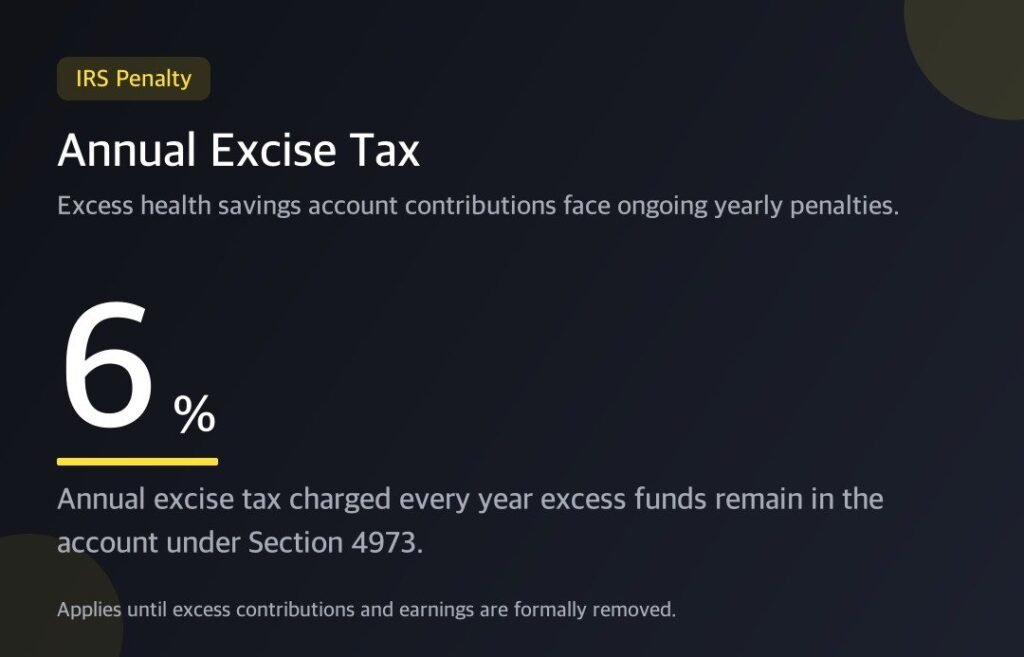
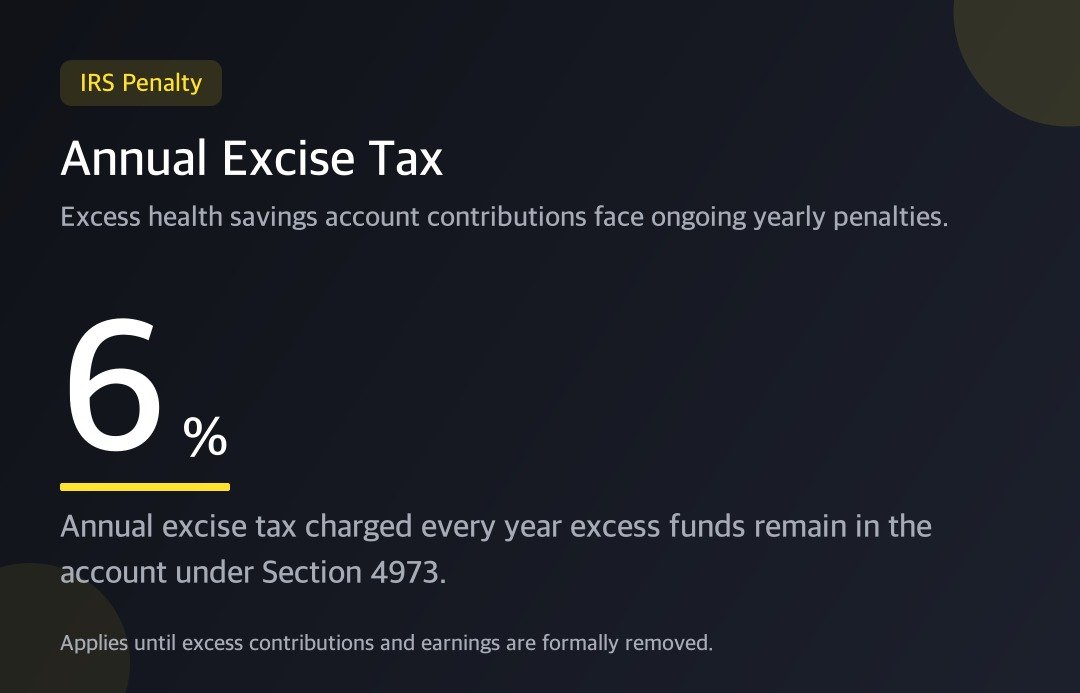
Her annual contribution limit shrinks to one-twelfth for each eligible month, leaving $2,700 as an excess contribution. This triggers federal income tax additions—such as $594 assuming a 22% tax bracket—plus a 6% excise tax under Section 4973 of the tax code. The 6% excise tax repeats every year the excess funds remain in the account.
Additionally, higher taxable income can push up future Medicare premiums. For instance, a single filer’s income level can raise Part B premium costs two years later.
Steps to Clear Excess Contributions and Protect Your Savings
Savers can avoid ongoing excise taxes by addressing excess contributions before their tax filing deadline:
- Request a Removal of Excess: Ask your health savings account custodian specifically for a removal of excess contribution, as a standard withdrawal will not resolve the tax penalty.
- Amend Payroll Records: If contributions came through payroll, employers may need to issue an amended W-2.
- File Form 5329: If the tax deadline passes, the 6% excise tax must be reported annually on IRS Form 5329 until the funds are removed.
Three Strategies to Keep Your Window Clean
- Stop Deposits Early: Halt personal and employer contributions approximately six months before applying for Medicare or Social Security.
- Front-Load Responsibly: Calculate your prorated contribution limit based strictly on eligible months.
- Coordinate Benefits: Plan your Social Security claims and Medicare enrollment together to prevent accidental retroactive penalties.