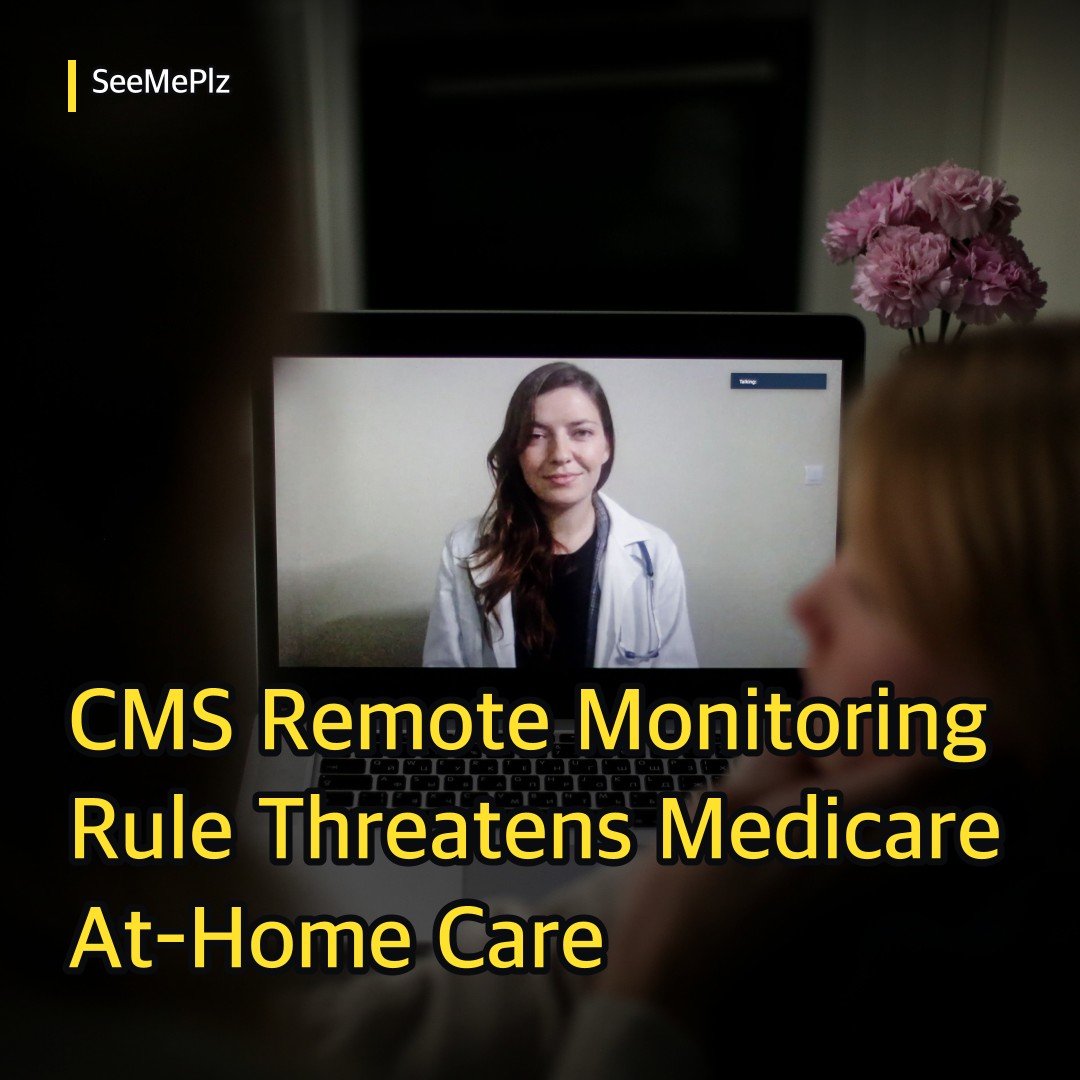
Older adults who rely on Medicare to cover at-home blood pressure and blood sugar tracking may face major changes to their care delivery under a proposed rule from the Centers for Medicare & Medicaid Services (CMS).
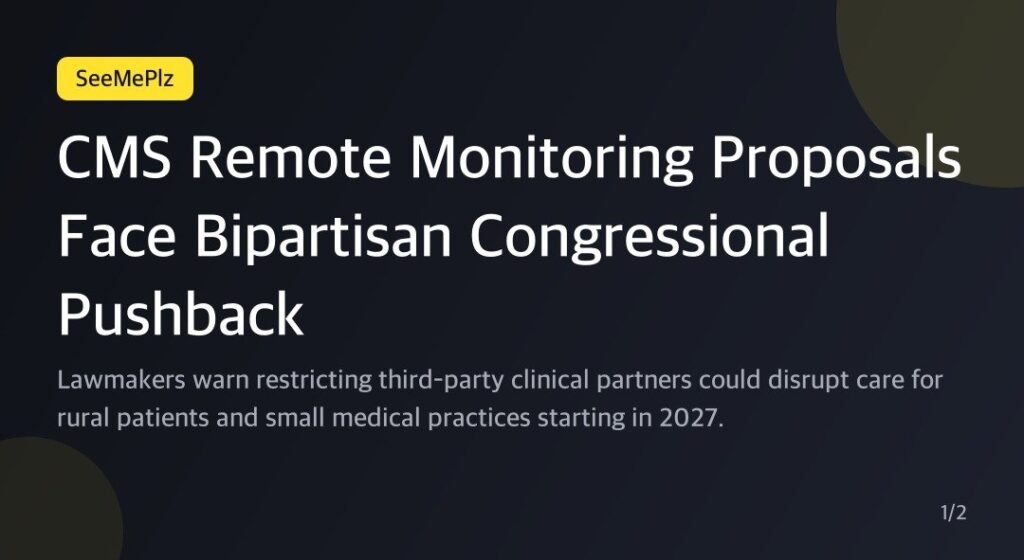
While the proposed policy aims to address program integrity and oversight, lawmakers and health organizations warn that restricting outside clinical partnerships could hit rural Medicare beneficiaries and small medical practices the hardest.
Here is a detailed look at what the proposed CMS rule entails, how rural healthcare access could be impacted, and what Medicare patients need to know right now.
What Is the Proposed CMS Remote Monitoring Rule?
Under the proposed physician payment rule released by CMS on July 14, Medicare would restrict how remote patient monitoring services are billed and delivered starting January 1, 2027.
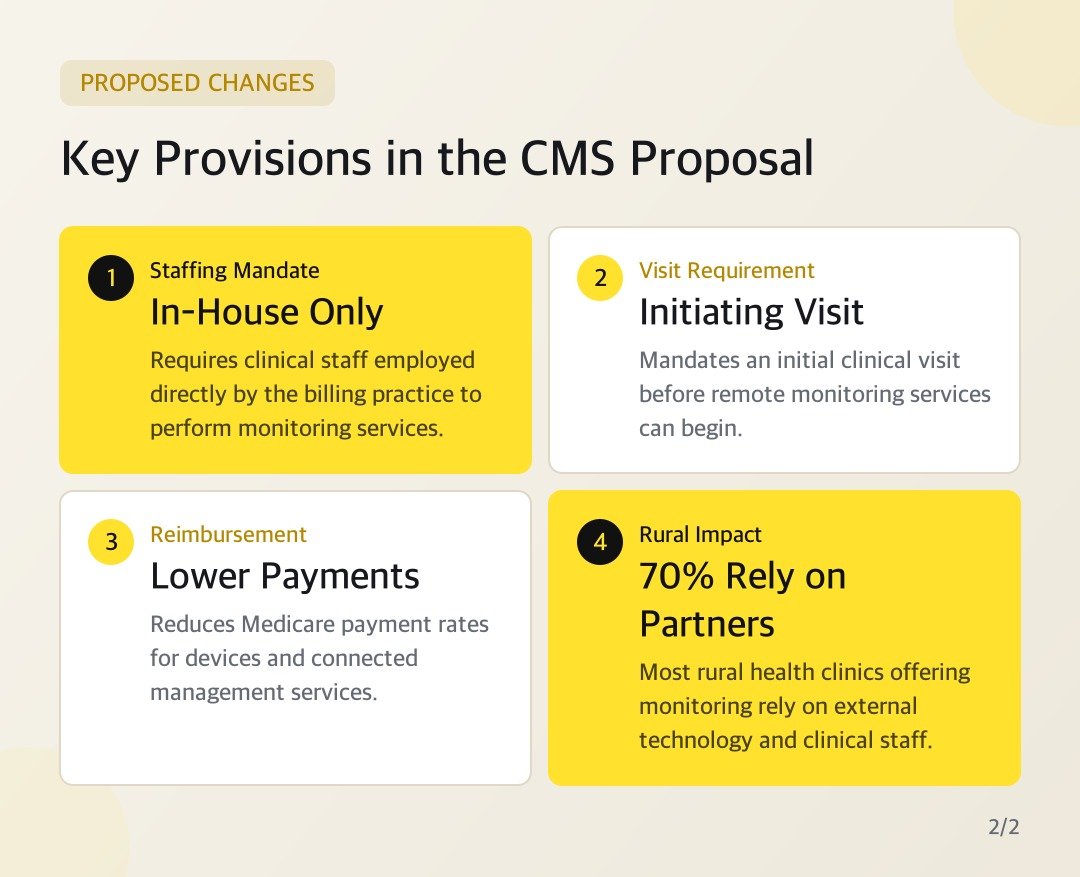
Key changes outlined in the CMS fact sheet include:
- In-House Staffing Requirement: Medicare would only pay for remote monitoring when services are performed by clinical staff directly employed by the billing practice, prohibiting the use of contracted third-party vendors.
- Required Initiating Visit: Patients would need an official initiating visit before remote monitoring services can begin.
- Lower Payment Rates: CMS proposes reducing reimbursement values for remote monitoring, citing lower costs for connected health devices than originally estimated.
According to CMS, these adjustments are intended to curb low-quality vendors and resolve program integrity issues. The HHS Office of Inspector General (OIG) reported in a 2024 review that approximately 43% of Medicare remote monitoring enrollees did not receive all three required service components: patient setup/education, the device itself, and ongoing treatment management. A follow-up OIG report noted that total Medicare remote monitoring payments rose 31% in 2024 to $536 million across nearly 1 million users.
Lawmakers and Rural Health Groups Push Back
On October 2, a bipartisan coalition of 32 House lawmakers sent an official letter to CMS Administrator Dr. Mehmet Oz urging the agency to rethink the proposed restrictions.
Led by Reps. David Kustoff (R-TN) and Troy Balderson (R-OH) alongside Reps.
Mark Pocan (D-WI) and Yvette Clarke (D-NY), the members warned that a blanket ban on partner clinical staff could disrupt existing care models and drive patients toward costly emergency rooms and institutional settings.
This follows a September 23 letter from Sens. Mark Warner (D-VA) and Marsha Blackburn (R-TN) emphasizing that external monitoring vendors provide essential operational support.
Impact on Rural Clinics and Small Practices
Rural healthcare providers rely heavily on external support to maintain connected care infrastructure:
- High Vendor Reliance: A survey by the National Association of Rural Health Clinics revealed that nearly 70% of rural health clinics offering remote monitoring depend on external clinical and technology partners.
- Isolated Billing Concerns: House lawmakers highlighted that the OIG flagged billing irregularities at only 0.68% of practices routinely billing for monitoring, arguing that targeted enforcement is appropriate rather than sweeping program-wide cuts.
- Risk of Hospitalization: The letter cited a published study warning that losing access to high-quality remote monitoring could lead to a 27% increase in hospitalizations.
- State Funding at Risk: According to an Alliance for Connected Care analysis, 22 states have announced about $240 million in monitoring funding through the federal Rural Health Transformation Program, which could be disrupted if small practices cannot fulfill the in-house staffing mandate.
What Rural Medicare Patients Should Do Today
It is important to note that the CMS proposal is not final. CMS typically releases its final physician payment rule in early November, leaving a two-month window before any finalized changes take effect on January 1, 2027.
Patients currently enrolled in remote monitoring programs should keep the following guidance in mind:
- Continue Using Your Device: Do not stop taking at-home readings or adjust prescribed medications without consulting your doctor.
- Ask Your Provider Questions: At your next regular or telehealth appointment, ask your care team who monitors your readings, whether the practice plans to continue the program in 2027, and if an initiating visit will be required.
- Keep a Written Log: Maintaining a paper backup of your blood pressure or glucose readings ensures you have data ready to share at doctor visits regardless of technology updates.
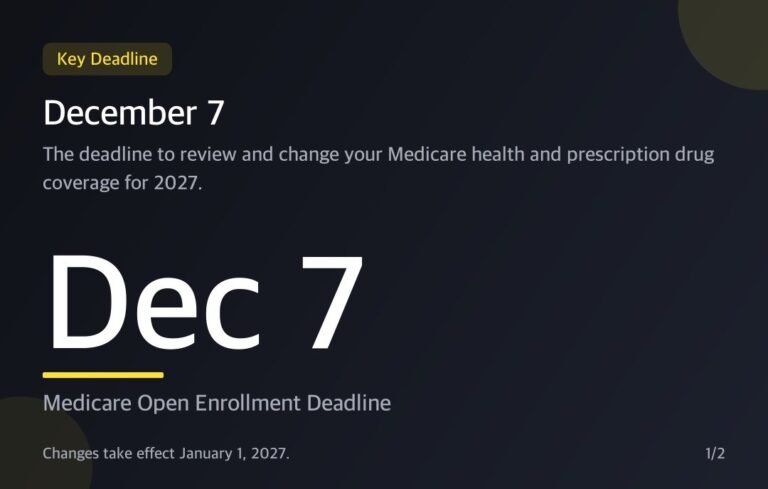
- Compare Plans During Open Enrollment: Beneficiaries enrolled in Medicare Advantage can compare coverage options during the annual open enrollment period starting October 15.
- Know When to Seek Immediate Emergency Care: At-home readings are tools for routine monitoring. If you experience severe symptoms—such as extremely high blood pressure with chest pain, severe headaches, trouble speaking, or low blood sugar causing confusion or fainting—call 911 immediately.