

Social Security Reform and the Debate Over Modernization
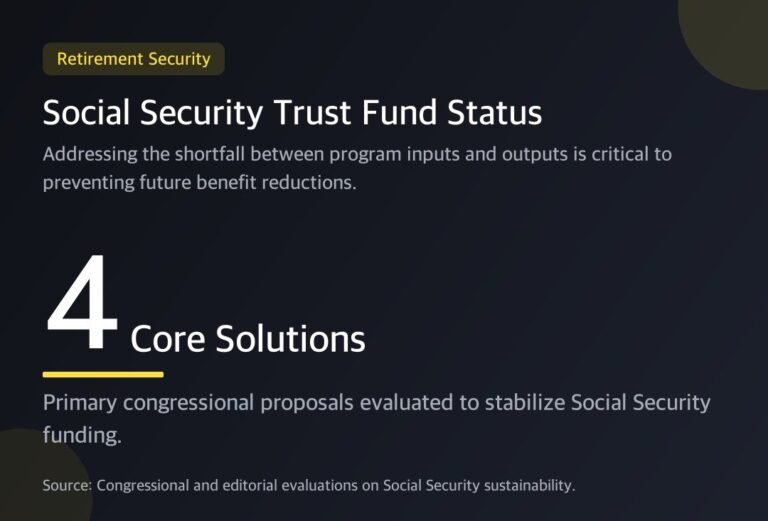
Social Security remains one of the most critical pillars of retirement security for American seniors, yet lawmakers and policy experts continue to debate its long-term financial health and adequacy. New York Representative Alexandria Ocasio-Cortez (AOC) and other federal lawmakers have brought renewed attention to how the program functions in today’s economy, arguing that benefit structures and funding rules must evolve to match modern living costs.
For retirees and workers planning for the future, understanding these proposed legislative changes and funding discussions provides essential insight into how retirement income strategies may shift in the coming years.
Why Critics Say Social Security Is Falling Short
While Social Security has historically served as a vital anti-poverty program, critics and advocates point out several core challenges:
- Living Costs vs. COLA Metrics: Annual cost-of-living adjustments (COLAs) are tied to inflation metrics that may not accurately reflect the actual spending patterns of retirees, particularly regarding rapidly rising health care and housing expenses.
- Fixed Income Pressures: Many seniors find that monthly Social Security checks alone are rarely sufficient to cover basic expenses, forcing them to rely on personal savings, pensions, part-time work, or other investments.
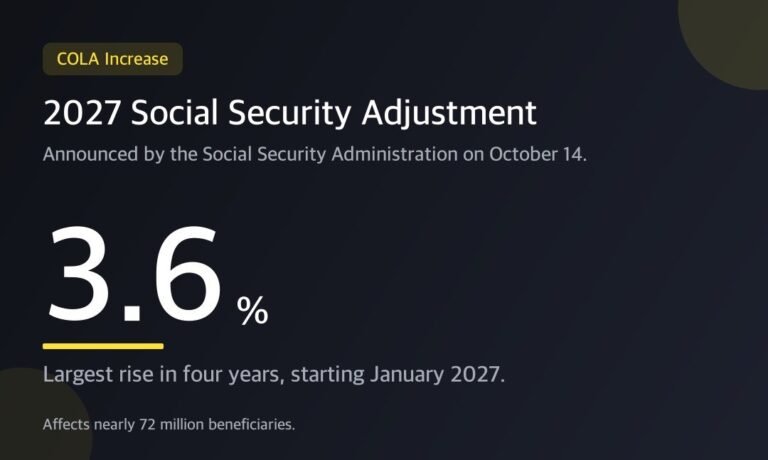
- Funding and Tax Caps: Payroll taxes currently apply only to wages up to an annual cap, which means income above that specific threshold is exempt from Social Security taxes. For instance, the maximum taxable wage is set at $192,300 in 2027.
Supporters of reform argue that these funding rules allow high earners to contribute a smaller share of their income compared to middle- and lower-income workers, creating a long-term sustainability gap.
The Social Security 2100 Act and Proposed Changes
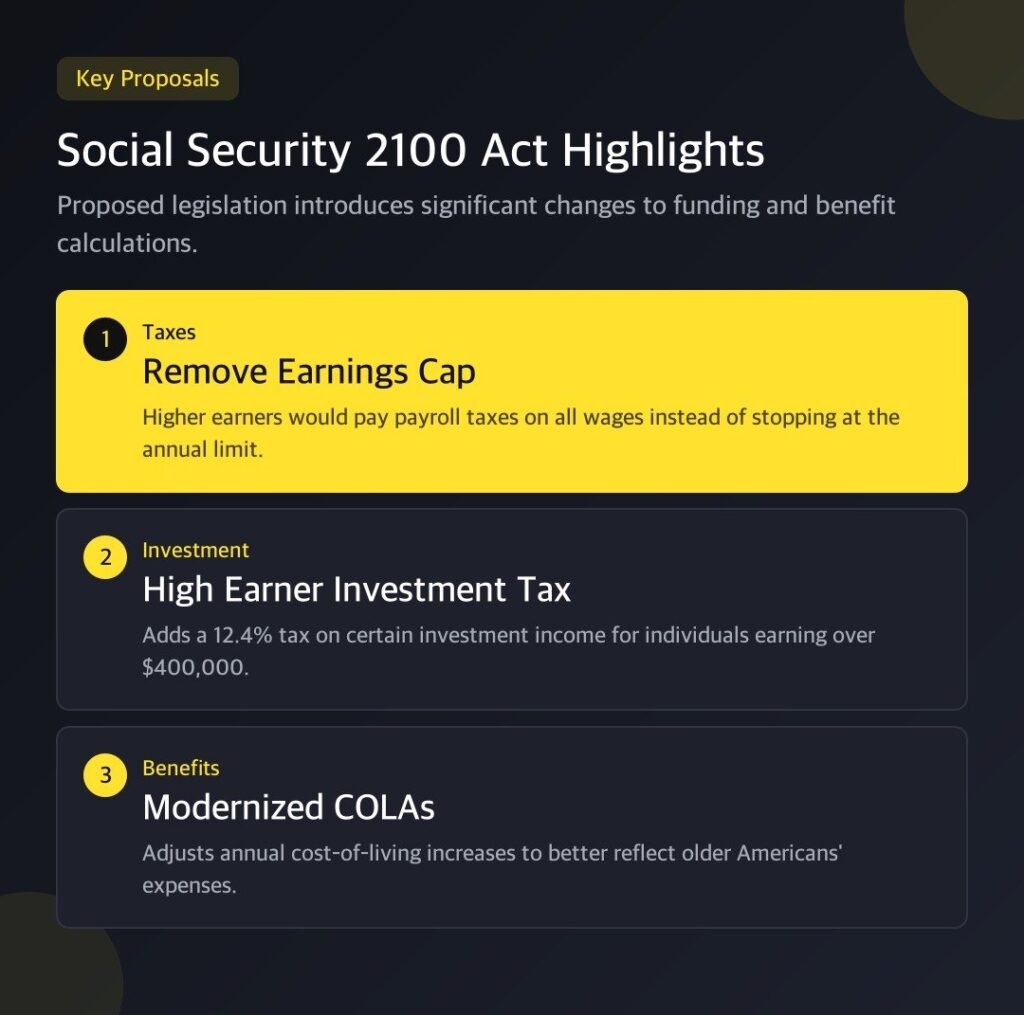
To address these financial and structural concerns, lawmakers introduced a new version of the Social Security 2100 Act in 2026. Sponsored by Representative John Larson and Senator Richard Blumenthal, the legislative package includes major proposals designed to boost benefits and secure the program’s finances:
- House and Senate Bills: The House version, H.R. 9519, was introduced on June 29, followed by the Senate companion, S. 5042, on July 21.
- Removal of the Earnings Cap: The legislation proposes removing the cap on earnings subject to Social Security payroll taxes, ensuring higher earners pay the tax on all of their wages.
- Investment Income Tax: A 12.4% tax would be added on certain investment income for individuals earning more than $400,000.
- Benefit Adjustments: The proposal aims to increase overall benefit levels, better adjust annual cost-of-living increases to reflect older Americans’ actual expenses, and improve support for lower-income retirees.
What This Means for Retirees and Future Workers
Although the Social Security 2100 Act has been introduced in Congress, it has not yet become law and must advance through the legislative process before any provisions take effect. However, the ongoing debate highlights critical considerations for retirement planning. Recognizing how benefits are calculated, how inflation adjustments work, and how legislative proposals seek to alter program funding can help workers and retirees prepare a more realistic and resilient income strategy for the future.