
Why Retirees Risk Credit Limit Cuts on Income Updates
When a retiree receives a routine prompt from a credit card issuer asking to update annual income, reporting only monthly Social Security checks can trigger unintended financial consequences. For instance, a retiree entering just their Social Security income may see a significant drop in their credit limit because the issuer cannot automatically see their other assets.
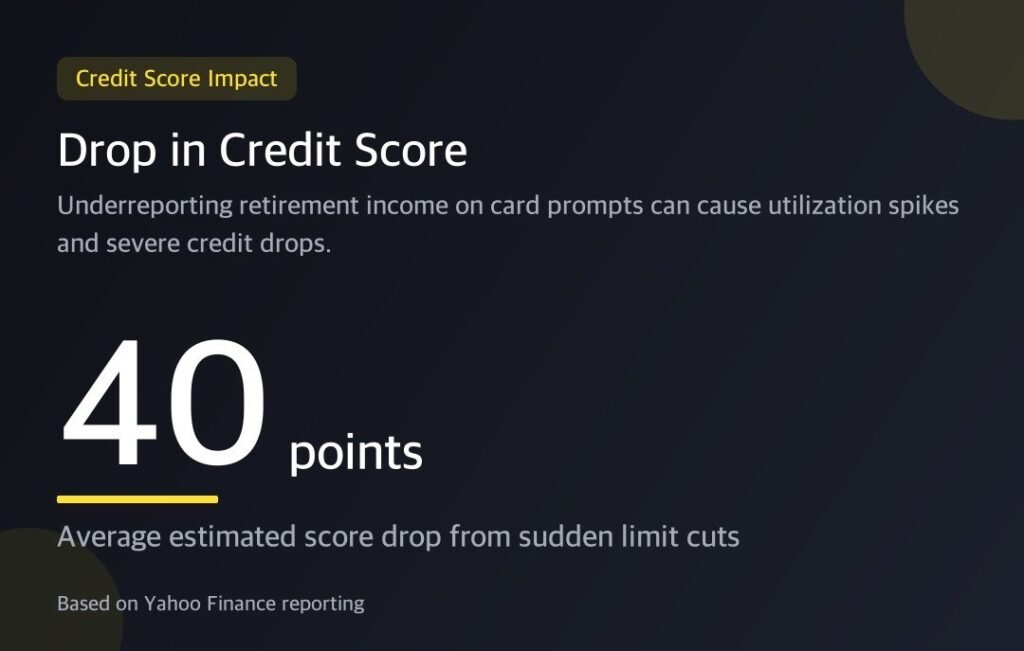
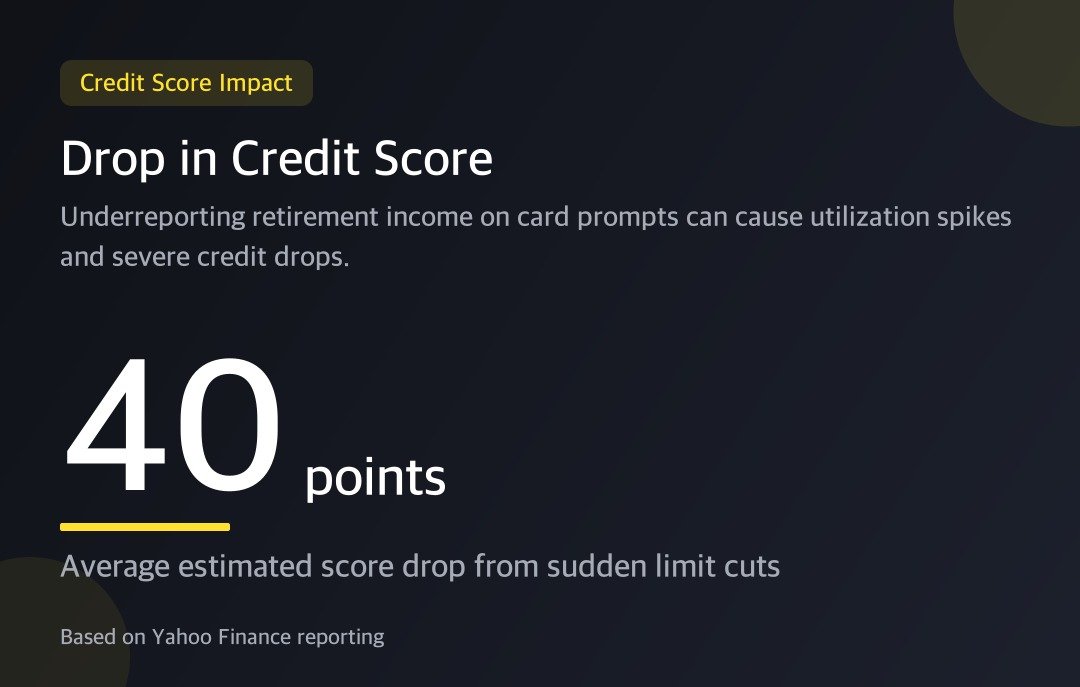
When credit limits are slashed while monthly spending remains steady, your credit utilization ratio jumps. This sudden spike can cause credit scores to drop by about 40 points, which can negatively affect HELOC approvals, car lease rates, and homeowners insurance pricing.
What Regulation Z Allows Retirees to Count
Under the CARD Act’s ability-to-pay rule governed by Regulation Z, card issuers are required to evaluate whether a consumer can make minimum payments based on income or assets and current obligations. Crucially, the rule permits consumers to count more than just a paycheck or standard benefit check.
Retirees have a reasonable expectation of access to multiple streams of financial resources, which can be legally reported on these card prompts. Eligible sources include:
- Social Security benefits
- Pensions
- Dividends
- Actual IRA withdrawals
- Accessible household income and assets
By factoring in these additional resources, a retiree’s real total income profile can be substantially higher than just their primary benefit payments, protecting them against unnecessary credit limit reductions.
Steps to Protect Your Credit Limit in Retirement
To ensure your credit profile remains accurate and your limits stay intact when prompted by issuers like Capital One, take these strategic steps:
- Set up automatic IRA withdrawals first to establish a steady, documentable stream of accessible funds.
- Report only documentable income that complies with Regulation Z guidelines, ensuring you include pensions, dividends, and accessible assets alongside your Social Security benefits.
- Call your card issuer directly if your limit has already been cut, explaining your complete financial picture to request your old credit limit back.