Social Security Retirement Earnings Test in 2027
Continuing to work while receiving benefits can help boost a fixed income, but if you claim Social Security before reaching your full retirement age, you must keep an eye on your earnings. For Americans balancing a paycheck and retirement benefits, understanding the annual earnings limits is critical to avoiding unexpected changes in monthly payments.
Both earnings limits are rising, allowing beneficiaries to earn more money before Social Security temporarily withholds a portion of benefits. However, not all income counts toward these limits, and knowing the rules helps you plan your retirement budget effectively.
2027 Earnings Limits by Age
Your age determines which specific earnings limit applies to you under Social Security’s retirement earnings test:
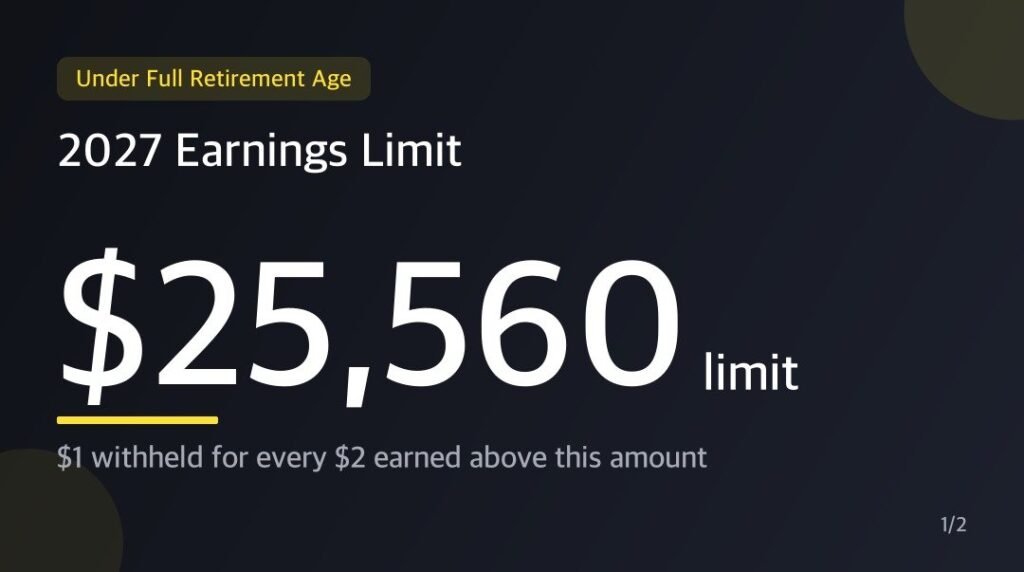
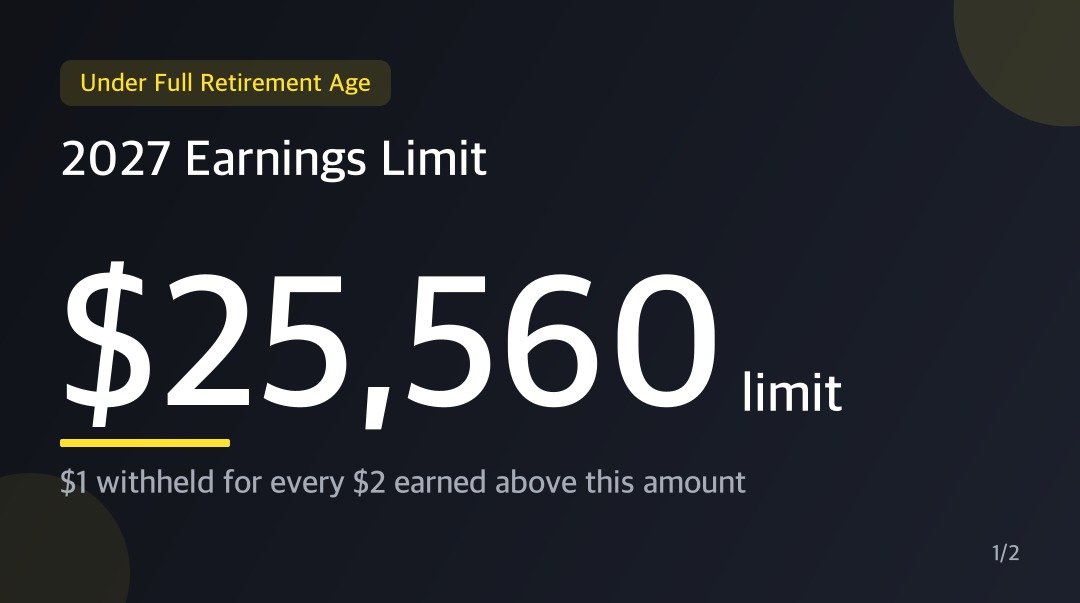
- Under full retirement age all year: You can earn up to $25,560 before Social Security withholds $1 in benefits for every $2 you earn above that threshold.
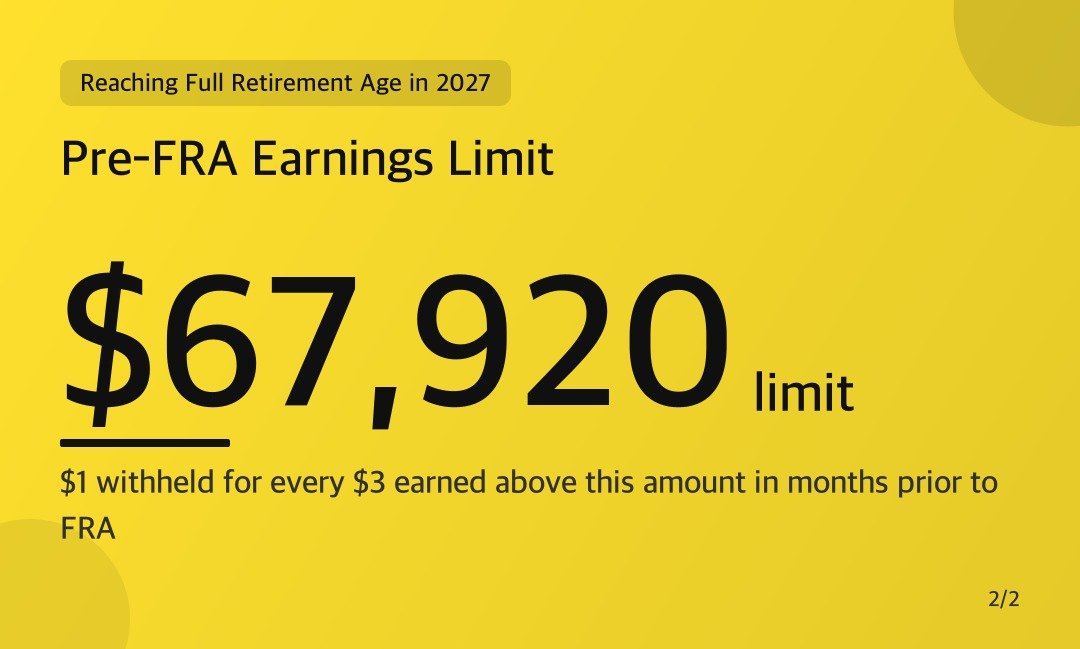
- Reaching full retirement age during 2027: You can earn up to $67,920 in the months before the month you reach your full retirement age, with $1 withheld for every $3 earned above the limit.
Starting with the exact month you reach your full retirement age, your earnings no longer reduce your benefits under this retirement earnings test, regardless of how much you make.
What Income Counts Toward the Earnings Limits?
The earnings test specifically looks at certain types of work income while excluding others. The rules treat earned income differently from passive or retirement income sources:
- Counts: Wages and net income from self-employment, including bonuses and commissions from a job.
- Does Not Count: Pensions, annuities, investment income (such as interest and dividends), veterans benefits, and other government or military retirement payments.
For example, if you receive $20,000 from a pension, $10,000 from investments, and earn $24,000 at a part-time job, only your $24,000 job earnings apply toward the limit. This keeps you below the annual threshold and prevents benefit withholding under the test.
Understanding Benefit Withholding and Adjustments
Going over the lower limit can mean months without a check because Social Security can withhold entire monthly payments. For instance, earning $40,000 while staying under full retirement age throughout 2027 puts you $14,440 over the limit, resulting in $7,220 in withheld benefits.
However, benefits withheld due to earnings are not permanently lost. Once you reach full retirement age, Social Security adjusts your retirement benefit to credit the months affected by earnings-related withholding, leading to larger monthly payments later on. Additionally, continuing to work can further increase your benefit if a higher-earning year replaces a lower one in your calculation.