
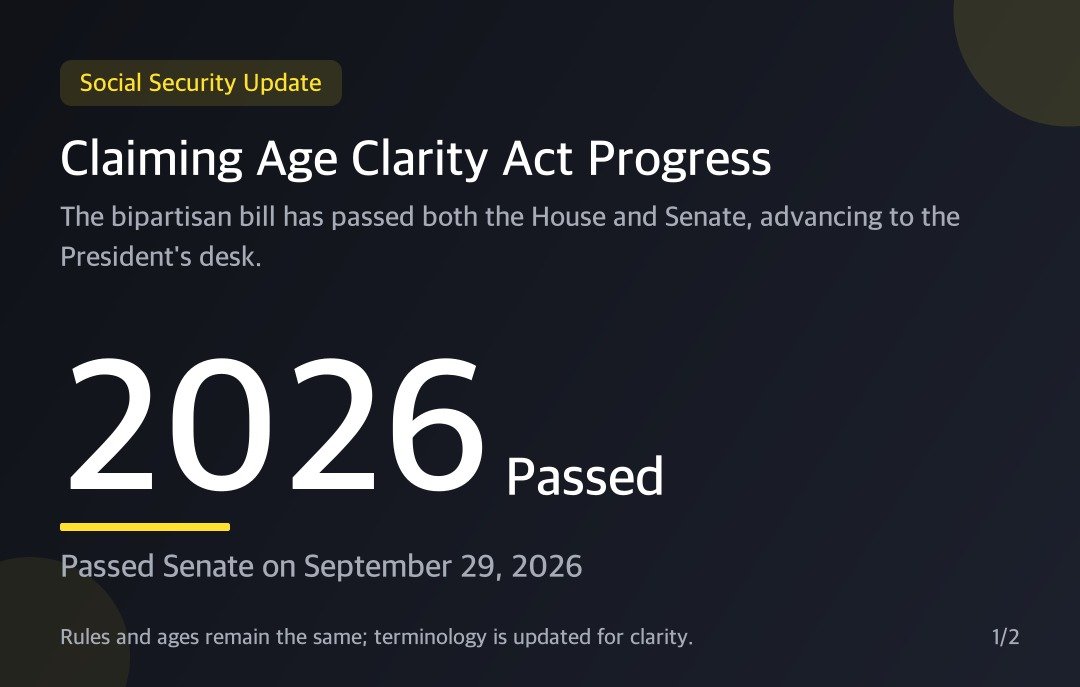
Navigating the Social Security Administration (SSA) rules can be complex, and many Americans struggle to identify their correct retirement timeline. To tackle widespread confusion regarding when to file for retirement benefits, Congress recently passed the bipartisan Claiming Age Clarity Act. Designed to replace confusing terminology with clearer, more transparent language, this new legislation aims to help future retirees understand the financial consequences of their filing choices.
What is the Claiming Age Clarity Act?
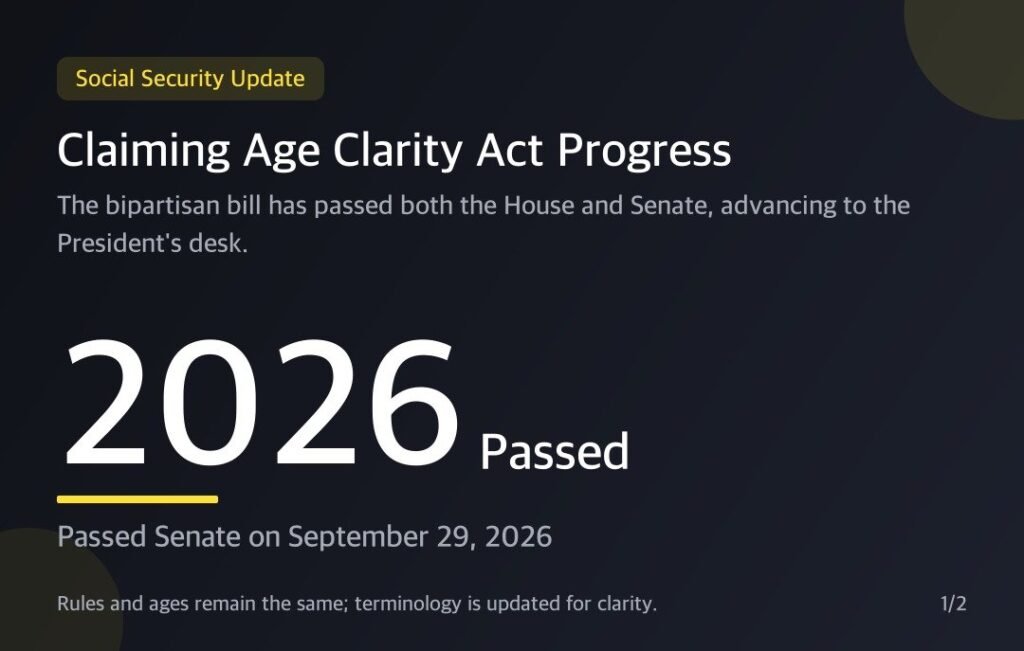
Introduced in September 2025 by Representatives Lloyd Smucker and Don Beyer, the bipartisan Claiming Age Clarity Act successfully cleared the House and passed the Senate on September 29, 2026. The bill is now heading to the President’s desk to be signed into law.
Studies from organizations like the Nationwide Retirement Institute show that only 21% of U.S. adults can accurately identify their full retirement age, and just 8% know all the factors determining eligibility for their maximum monthly benefit. Because terms like "Full Retirement Age" often mislead recipients into thinking they have reached the absolute maximum payout, the new law updates official wording to remove ambiguity.
How Social Security Terms Are Changing
The actual rules and age thresholds of Social Security are not changing under this legislation. Age 62 remains the earliest age to file, full retirement age remains 67 for those born in 1960 or later, and delayed retirement credits still stop accumulating at age 70. However, the official terminology used by the SSA is shifting:
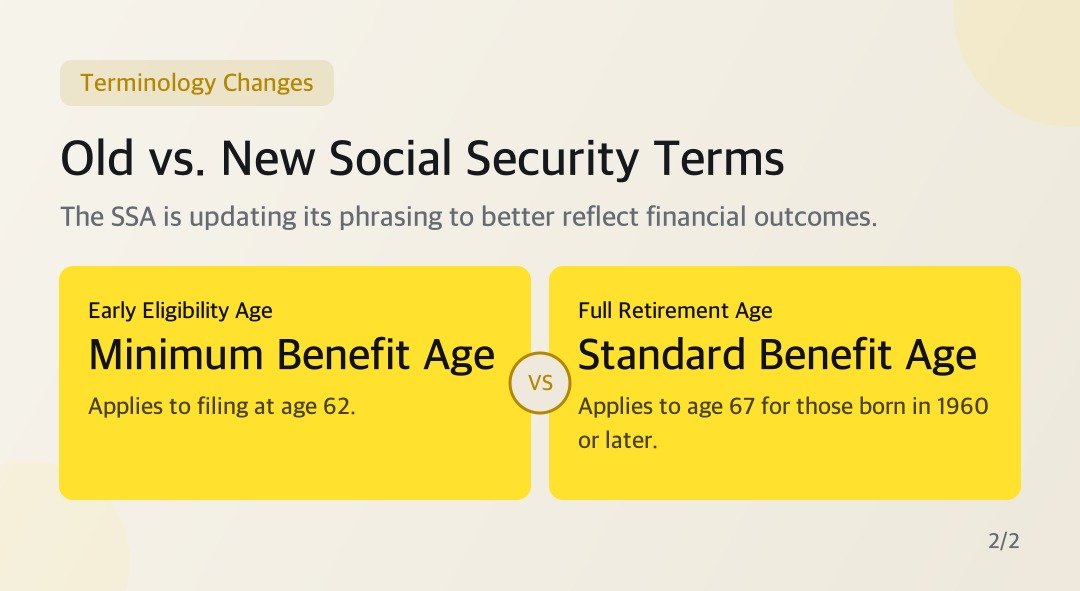
- Early Eligibility Age (Age 62) will become Minimum Benefit Age
- Full Retirement Age will become Standard Benefit Age
- Delayed Retirement Age (Age 70) will become Maximum Benefit Age
By renaming these options, proponents hope to clarify that the standard age does not equal the maximum monthly payout, which requires waiting until age 70 to achieve an 8% yearly boost.
Why Clearer Language Matters for Retirees
Filing for benefits too early can result in permanent reductions to monthly checks. According to Boston College’s Center for Retirement Research, over a quarter of men and women claim benefits as early as age 62. Because many seniors rely heavily on these checks for essential costs, permanent reductions can create long-term financial strain.
If you have already claimed benefits and are unhappy with your monthly amount, you may have a brief window to reconsider. Beneficiaries can withdraw their application, repay received funds, and refile at a later date if they take action within one year of filing.