
Understanding Provisional Income and Your Social Security Tax
When you retire with a large traditional 401(k), your retirement income strategy can inadvertently trigger taxes on your Social Security benefits. Many retirees are surprised to learn that a portion of their government benefit becomes subject to federal income tax once their total financial picture reaches certain thresholds.
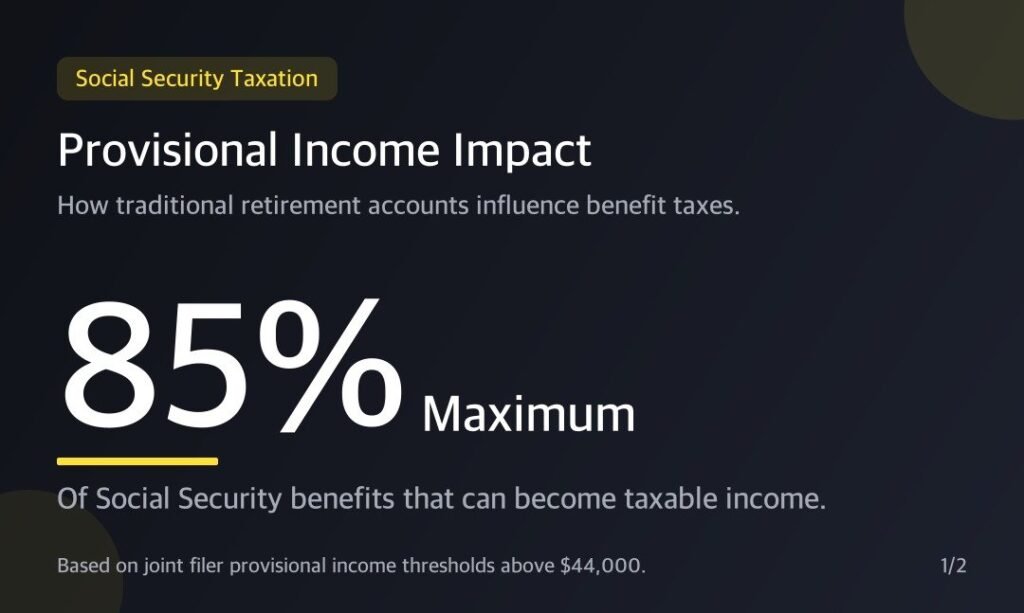
For a retired couple collecting $44,000 a year in Social Security alongside $60,000 annually from a $1.1 million traditional 401(k), large pretax withdrawals pull up to the federal maximum of 85% of their Social Security benefit onto their tax return as taxable income.
How the IRS Calculates Provisional Income
The IRS determines whether your Social Security benefits are taxable using a metric called provisional income. This formula counts half of your annual Social Security benefit plus nearly all of your other income.
- Half of Social Security Benefit: $22,000 for a couple receiving $44,000.
- Retirement Account Withdrawals: Traditional 401(k) and IRA withdrawals.
- Other Income Sources: Pensions, dividends, interest, capital gains, and even tax-exempt municipal bond interest.
For the couple in this scenario, adding $22,000 (half their benefit) to their $60,000 401(k) withdrawal creates a provisional income of $82,000.
Unindexed Thresholds Trap More Retirees
For joint filers, the income thresholds that determine benefit taxation have remained unchanged for decades:
- Above $32,000: Up to half of the Social Security benefit becomes taxable.
- Above $44,000: Up to 85% of the benefit becomes taxable.
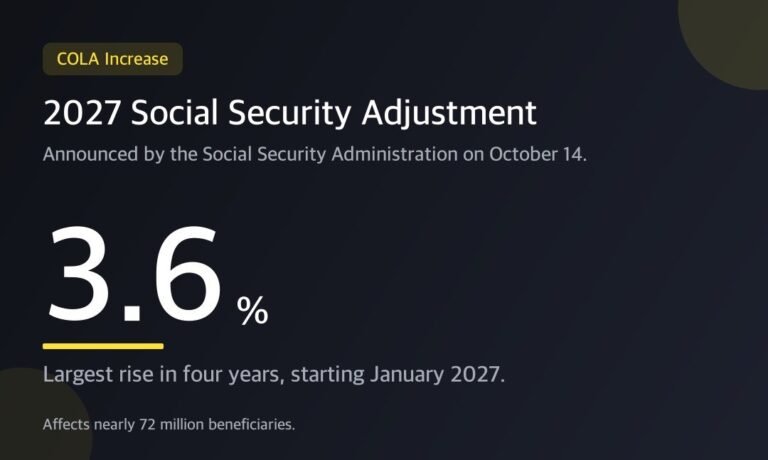
The first level was established in 1983 and the second in 1993, and neither has ever been adjusted for inflation. Meanwhile, benefits adjust upward over time—such as the 2027 cost-of-living adjustment tracking toward 3.3%—gradually pulling more retirees into higher tax brackets.
Why Popular Financial Fixes Often Fail
Retirees frequently attempt common strategies to manage their tax burden, but some approaches do not solve the provisional income problem:
- Moving into Municipal Bonds: While municipal bond interest is exempt from regular income tax, it still counts toward your provisional income calculation, leaving the tax trigger unchanged.
- Relying on Senior Deductions: New deductions for qualified individuals lower overall taxable income, but provisional income is calculated before these deductions are applied.
- Waiting for RMDs: Delaying withdrawals allows the 401(k) balance to grow, leading to larger required minimum withdrawals later that push provisional income even higher.
Effective Ways to Lower Your Tax Burden
Managing your tax liability effectively requires proactive planning before claiming benefits.
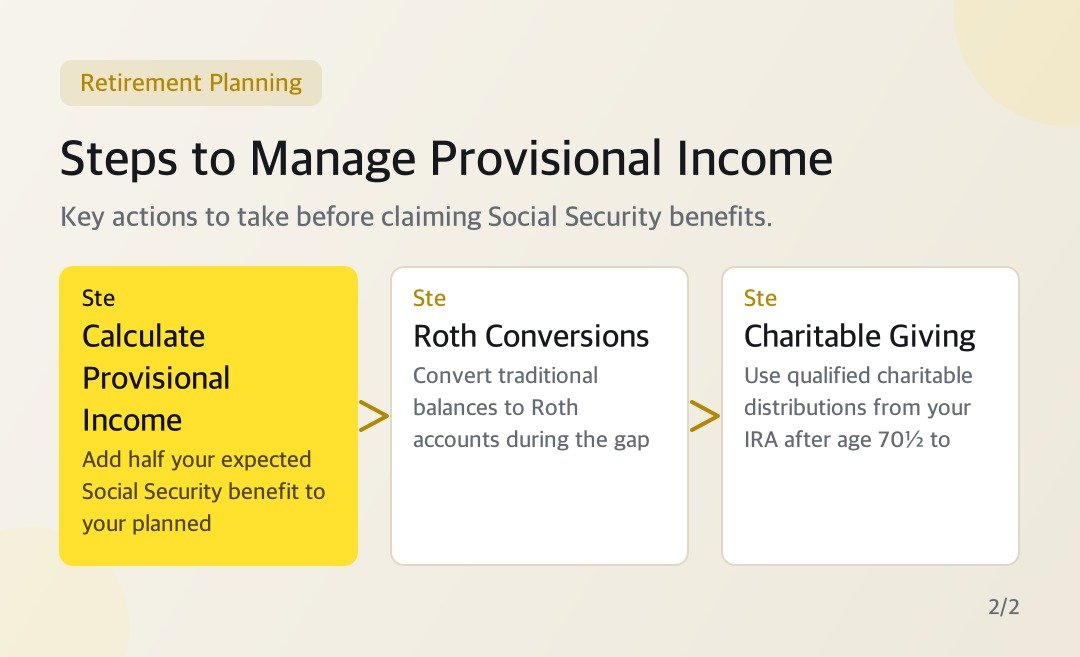
- Reduce Traditional Balances Early: Transferring funds from traditional accounts to Roth accounts during the gap years between retiring and claiming Social Security helps lower future taxable withdrawals, as Roth distributions do not count toward provisional income.
- Calculate Provisional Income First: Review your expected first-year benefit, planned withdrawals, and interest sources. If your total exceeds $44,000, your benefits will face taxation unless account balances are reduced.
- Utilize Qualified Charitable Distributions: After age 70½, direct distributions from your IRA to charity lower your provisional income dollar for dollar without showing up as taxable income.