
Understanding the Average Social Security Benefit at Age 85
If you are 85 years old or approaching this milestone, your monthly Social Security benefit represents a financial journey that began decades ago. The payment landing in your bank account reflects a career that may have started in the 1960s, along with historical claiming rules and earnings histories. Evaluating how your check compares to national numbers can offer helpful context for managing your finances.
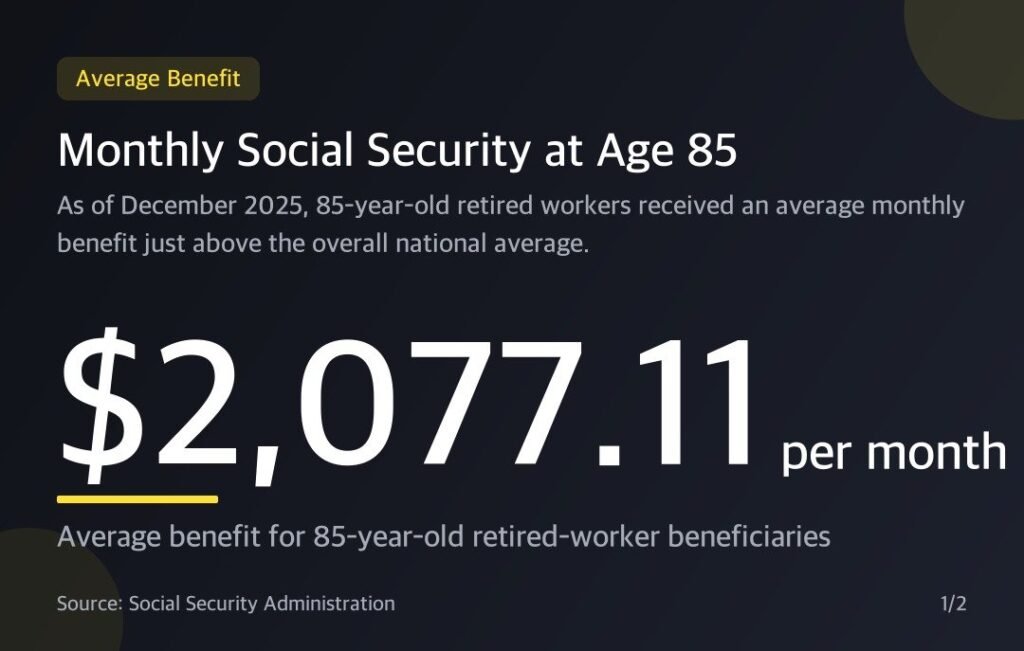
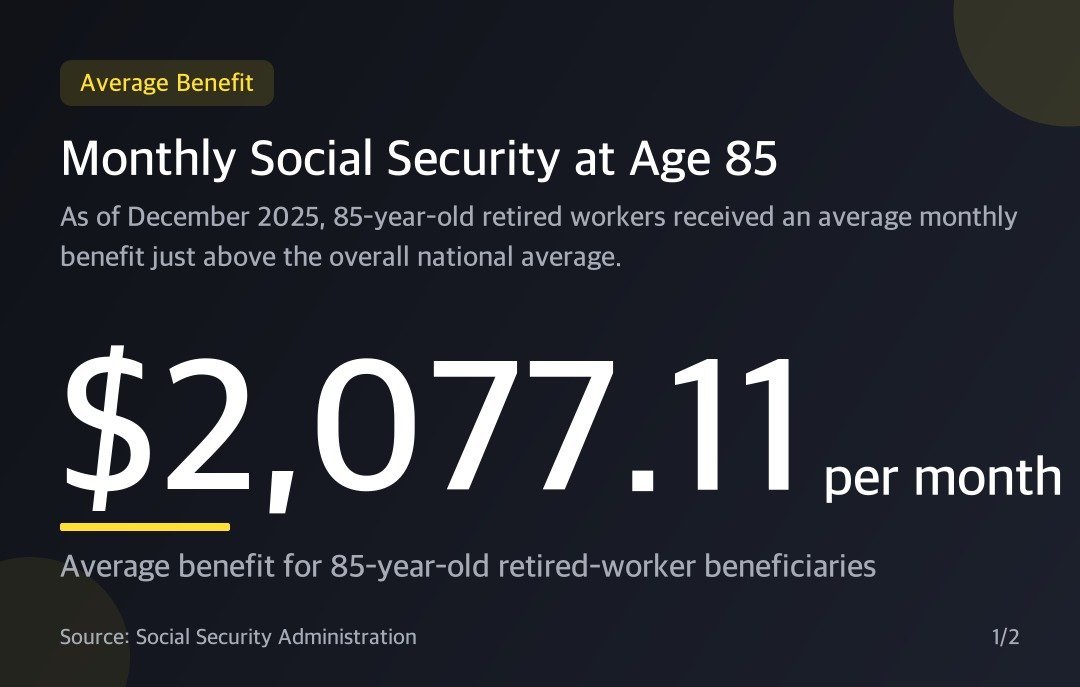
According to Social Security Administration (SSA) data from December 2025, retired-worker beneficiaries aged 85 received an average monthly benefit of $2,077.11. This figure sits just above the overall average of $2,071.30 across all retired workers of any age.
The Gender Gap in 85-Year-Old Benefits
National averages reveal a noticeable difference when broken down by sex:
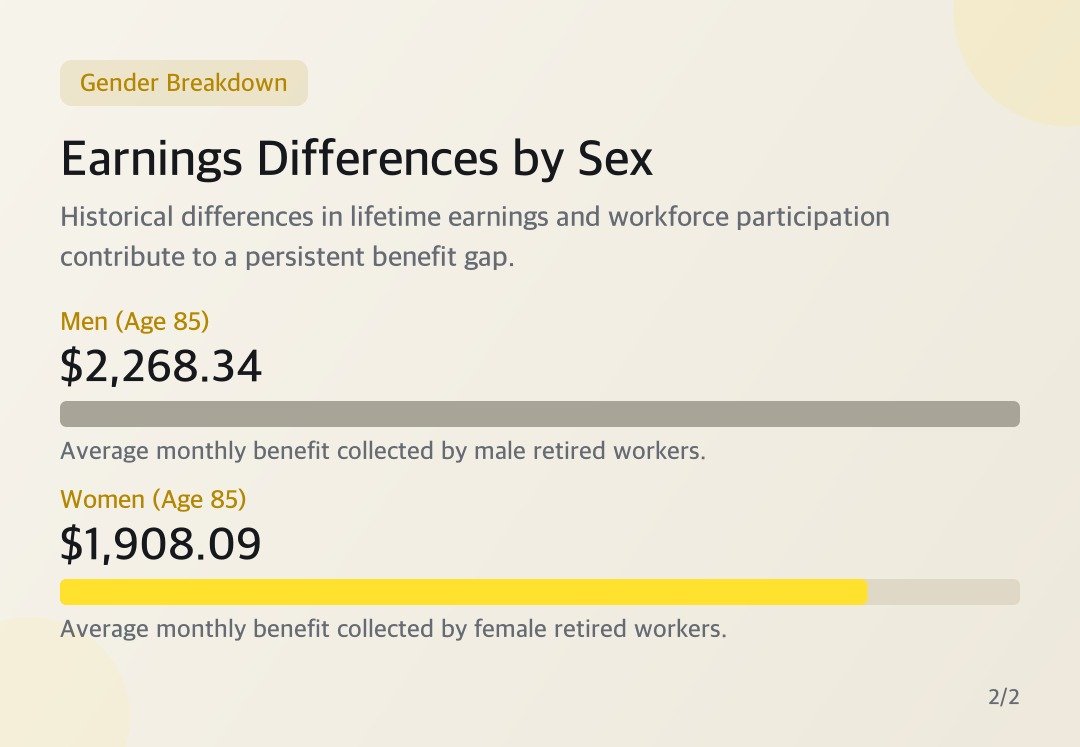
- Men (Age 85): Received an average of $2,268.34 per month.
- Women (Age 85): Received an average of $1,908.09 per month.
This gap of more than $360 a month stems from differences in lifetime earnings rather than the SSA benefit formula, which applies identically regardless of sex. Women of this generation were more likely to take time out of the workforce for caregiving, work part-time, or earn lower wages over their careers. Because benefits rely on a worker’s 35 highest-earning years, fewer working years or lower lifetime wages result in a smaller Average Indexed Monthly Earnings (AIME).
However, women often rely on spousal or survivor benefits to offset lower individual retired-worker payments. SSA data shows that women received higher average benefits than men as spouses of retired workers ($1,007.87 versus $767.35) and as nondisabled widows ($1,948.47 versus $1,683.93).
How Claiming Rules and COLAs Shaped Your Check
The 85-year-olds collecting benefits today typically filed their claims in the early 2000s. Full Retirement Age (FRA) was lower for workers born in the early 1940s compared to today’s rules, often closer to 65 or 66.
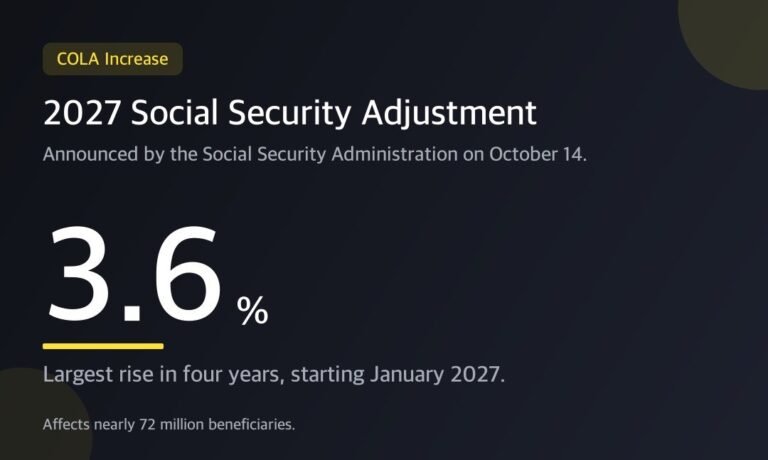
Benefit amounts were permanently set based on the earnings history and claiming rules active at that time. While annual cost-of-living adjustments (COLAs)—such as the 2.8% COLA for 2026—have continuously increased original benefits to keep pace with inflation, the foundational formula remains unchanged.
Taxes, Savings, and Managing Expenses at 85
For many mid-80s retirees, Social Security serves as a primary financial anchor because personal savings and pensions may have diminished over time. However, managing this income requires keeping several factors in mind:
- Taxes on Benefits: Under IRS rules, up to 50% of benefits may be taxable if combined income exceeds $25,000 for single filers or $32,000 for joint filers. For incomes above $34,000 (single) or $44,000 (joint), up to 85% of benefits can be taxable.
- Required Minimum Distributions (RMDs): Traditional IRAs and 401(k) accounts require RMDs starting at age 73, adding to taxable income and potentially increasing the taxable portion of Social Security benefits.
- Medicare Premiums: Monthly Social Security deposits can look smaller than the official benefit amount because Medicare premiums are typically deducted directly from payments.
Ultimately, comparing your check to a national average matters less than ensuring your total income—combining Social Security, savings, pensions, and home equity—comfortably covers your current living expenses and health care needs.