
What Is the Social Security Earnings Test?
If you claim Social Security retirement benefits before reaching your full retirement age and continue working, you may face a reduction in your current payout if your earnings exceed specific annual limits. This process is known by the Social Security Administration (SSA) as the Social Security earnings test.
Your full retirement age depends on your birth year. For anyone born in 1960 or later, full retirement age is 67. Once you officially reach your full retirement age, the earnings limit no longer applies, and you can earn any amount of money annually without your benefits being reduced.
2027 Social Security Earnings Test Exempt Amounts
The SSA increases the retirement earnings test exempt amount every year to keep pace with the national average wage index. This adjustment allows workers under full retirement age to earn slightly more before facing benefit reductions.
Here is how the limits compare:
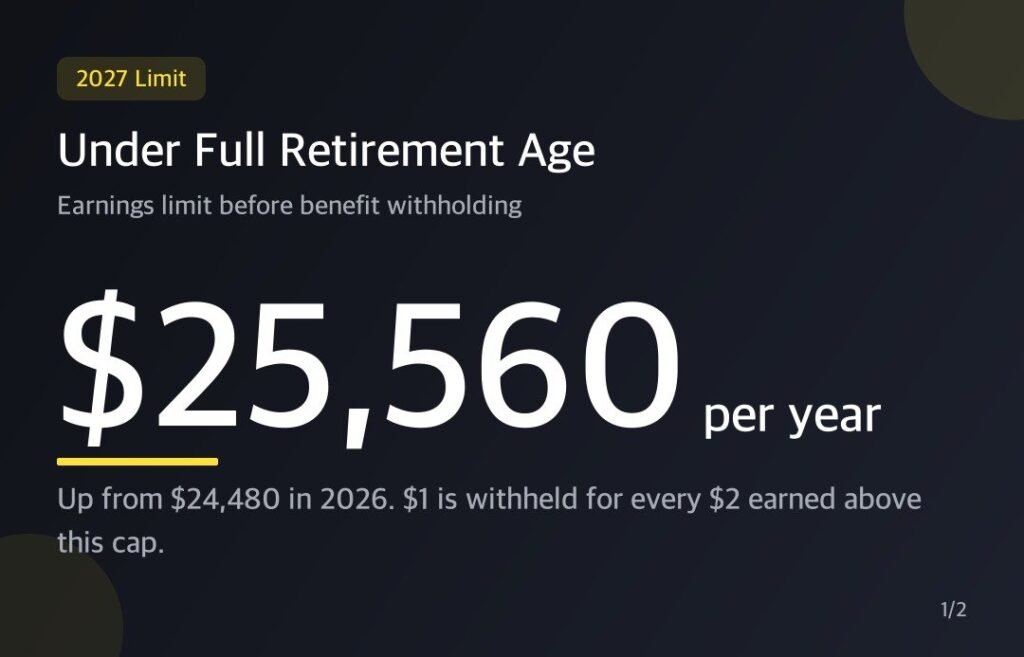
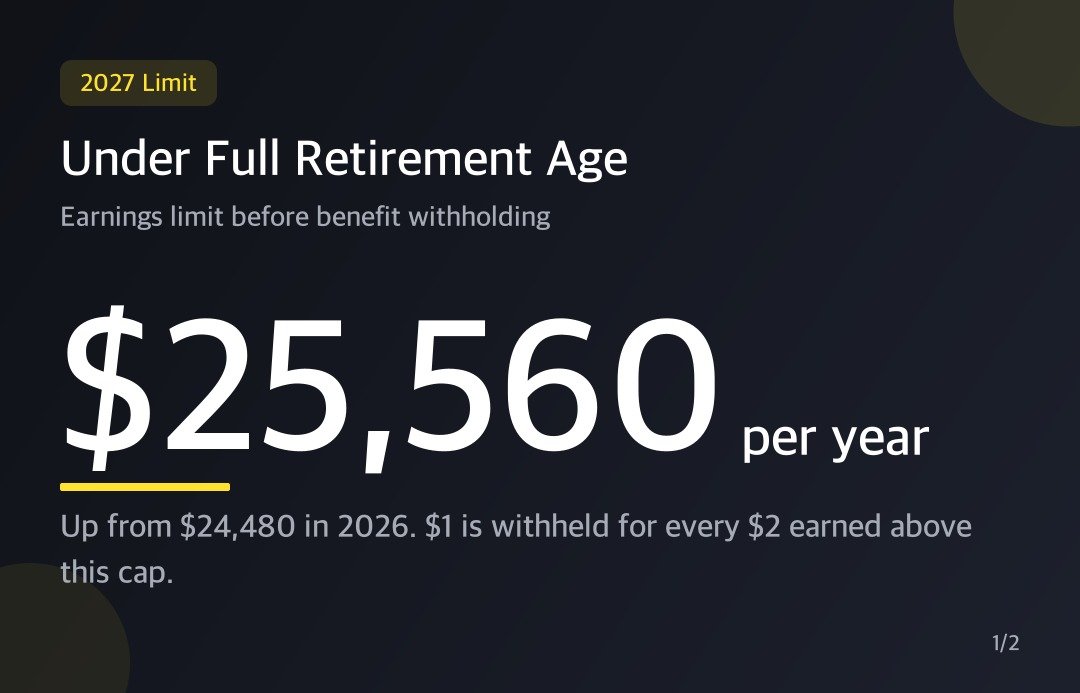
- For individuals under full retirement age: The limit was $24,480 in 2026 and increases to $25,560 in 2027. If you exceed this cap, the SSA withholds $1 in benefits for every $2 you earn beyond the limit.
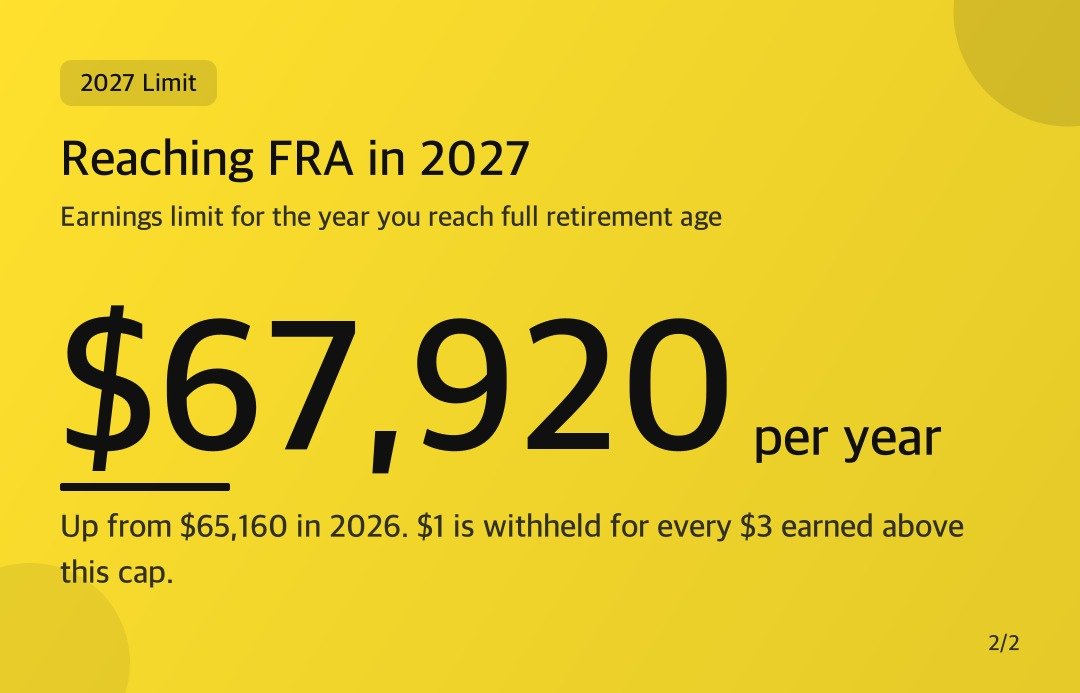
- For individuals reaching full retirement age in the same year: The limit was $65,160 in 2026 and increases to $67,920 in 2027. For earnings above this cap during the months prior to reaching full retirement age, the SSA withholds $1 in benefits for every $3 you earn.
What Happens to Withheld Benefits?
It is important to note that the SSA only temporarily withholds your benefits. Once you officially reach your full retirement age, the agency recalculates your benefit amount and credits you for the money that was withheld. You will receive those funds over time rather than as a lump sum.
Furthermore, continuing to work can sometimes help increase your future benefits. The SSA calculates your retirement payment based on your highest 35 years of earnings. If your earnings in your sixties exceed those from past years, working longer can replace lower-earning years and boost your future monthly payments.
Income Types Exempt from the Earnings Test
Not all types of income count toward the earnings test limit. Only wages from a job and net self-employment income are evaluated.
Income sources that do not count toward the earnings test include:
- Investment income, capital gains, and inheritances
- Pensions, annuities, and retirement or IRA withdrawals
- Veteran and military benefits
- Rental income
- A spouse’s salary or wages
Tax Implications and Next Steps
While working while collecting Social Security can build your retirement fund, it may impact your tax obligations. If your combined income (adjusted gross income plus nontaxable interest and half of your Social Security benefits) exceeds certain thresholds, you might owe taxes on up to 85% of your benefits.
For single filers with a combined income between $25,000 and $34,000, up to 50% of benefits may be taxable. If combined income exceeds $34,000, up to 85% may be taxable. Near-retirees planning to work in 2027 should reevaluate their budgets and consider consulting a financial planner or tax professional to navigate these financial rules.