
Understanding Provisional Income and Social Security Tax
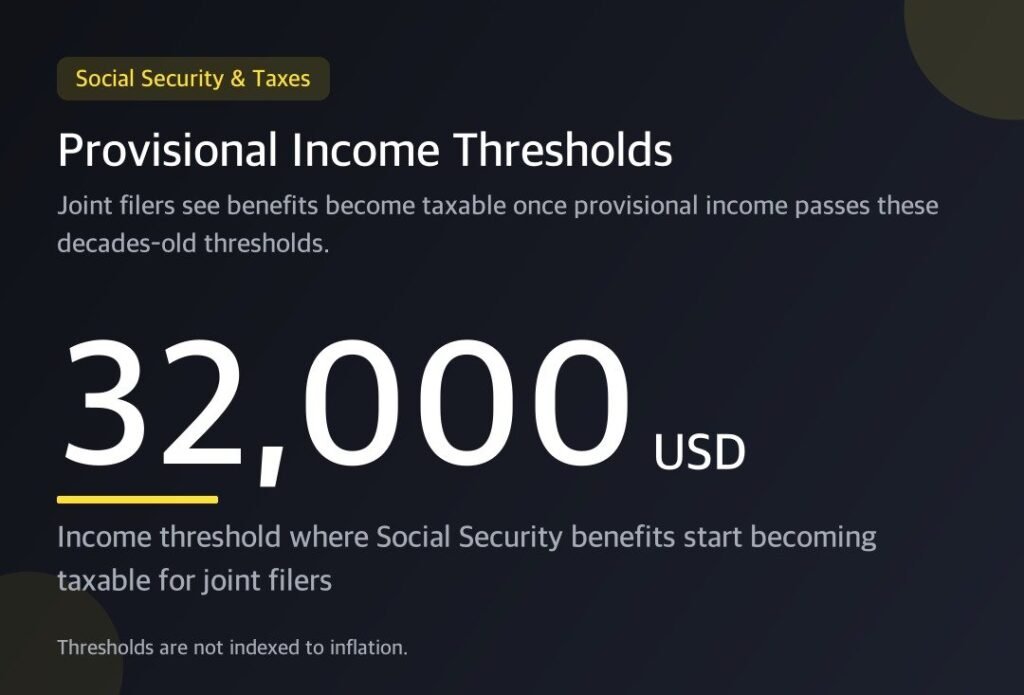
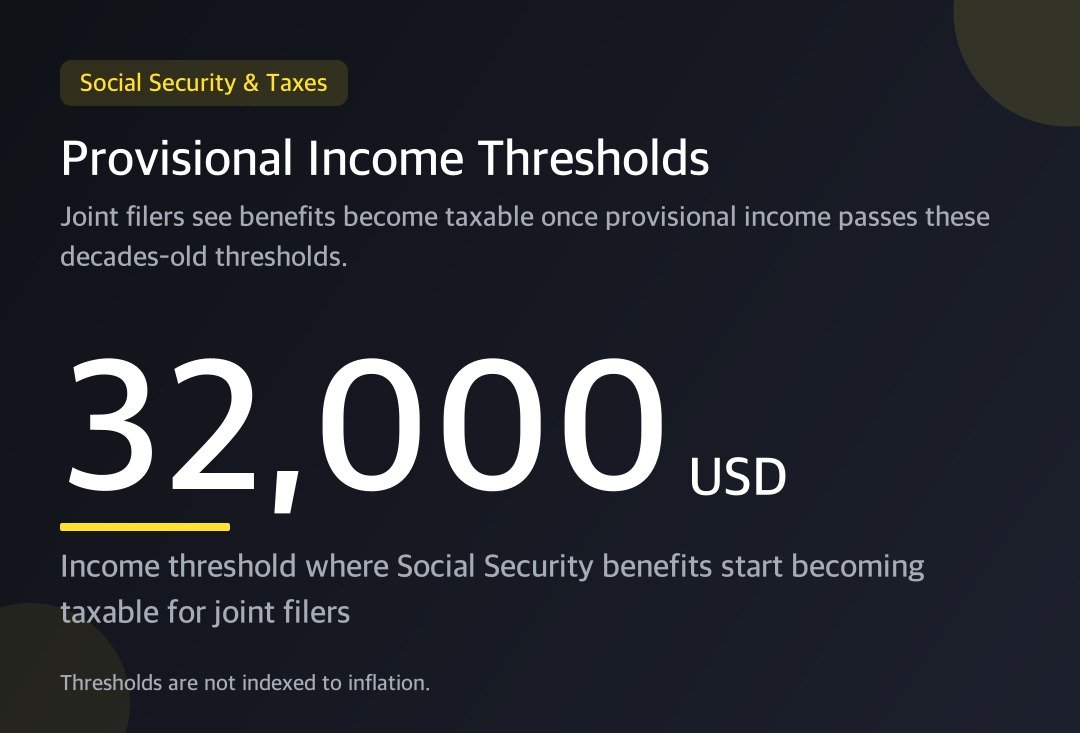
When a married couple adds a new Social Security check to their household income, they often overlook how it impacts their overall tax burden. The IRS tests Social Security taxation using provisional income, which includes one-half of your Social Security benefits plus all other income, such as tax-exempt interest and traditional IRA withdrawals. For joint filers, benefits begin to become taxable once provisional income passes $32,000, and up to 85 percent can become taxable above $44,000.
Because Congress never indexed these thresholds to inflation, every cost-of-living adjustment pushes more retirees over the line. For example, if a husband already collects $2,800 a month and his wife files for her own $1,400 monthly benefit, while also pulling $50,000 a year from a traditional IRA, the new income significantly raises their taxable benefit amount.
The Hidden Cost of IRA Withdrawals
Traditional IRA withdrawals play a major role in how Social Security checks get taxed. Until 85 percent of all benefits are taxable, every additional dollar pulled from an IRA creates extra taxable income because it drives up provisional income levels.
- Traditional IRA Path: Couples whose savings sit almost entirely in traditional accounts face higher effective tax rates on IRA distributions due to the cascading effect on benefit taxation.
- Roth and Cash Path: Funding part of annual spending from Roth IRAs or cash savings keeps money out of provisional income, reducing overall taxable income and lowering annual tax liability.
Two Essential Steps Before Receiving Your First Deposit
To avoid a surprise tax bill or underpayment penalties in April, retirees can take proactive measures:
- File Form W-4V: When claiming benefits, you can choose federal tax withholding of 7%, 10%, 12%, or 22% to cover potential tax liabilities automatically.
- Avoid Municipal Bonds for Tax Dodging: Tax-exempt interest from municipal bonds still counts toward provisional income, meaning it does not solve the underlying taxation issue.
Careful planning around account withdrawals and withholding selections helps retirees manage cash flow and protect their long-term savings.