
Understanding the Social Security Tax Torpedo
Many retirees are surprised to find that modest traditional IRA withdrawals can pull thousands of dollars of their Social Security benefits onto their tax return. This issue stems from a federal tax formula established in the 1980s that treats traditional IRA withdrawals and Roth distributions very differently.
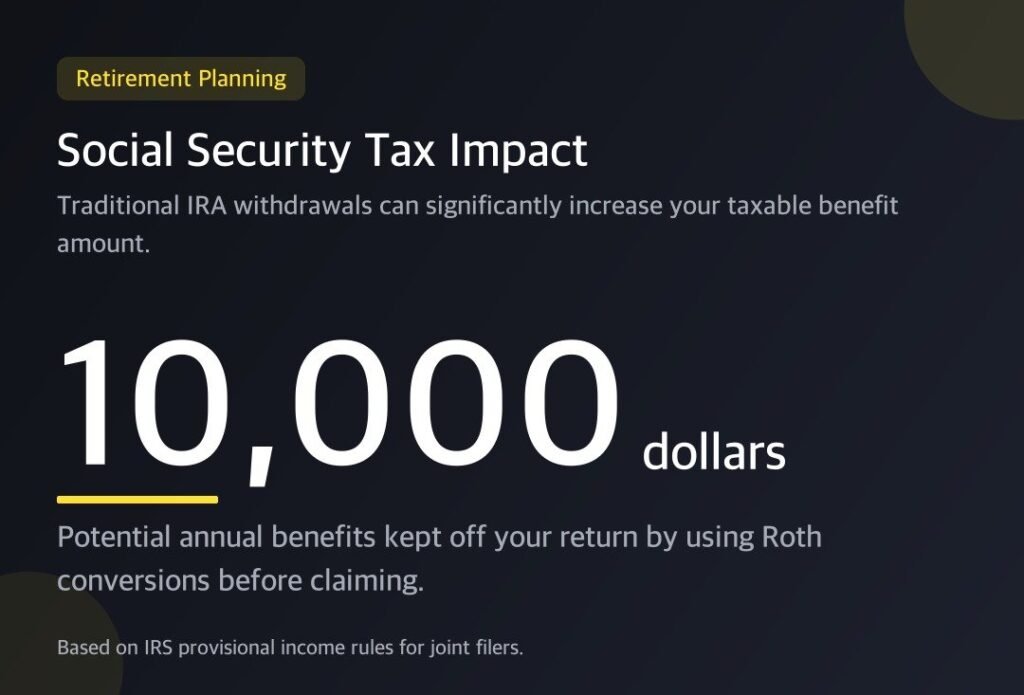
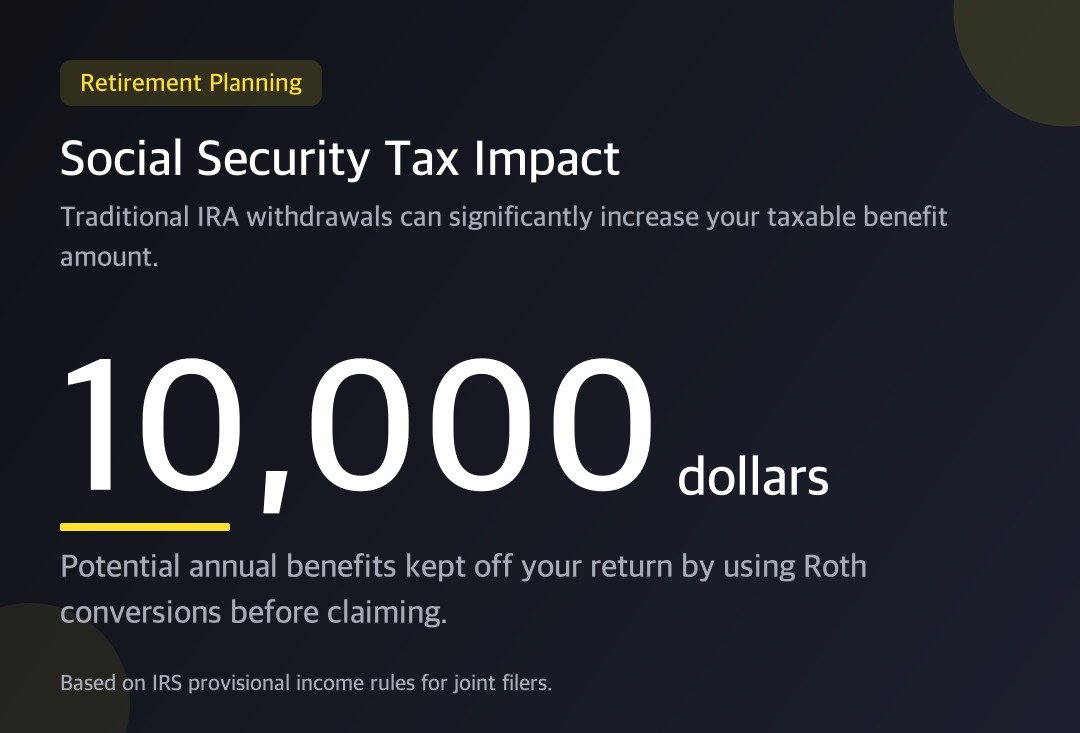
While qualified Roth withdrawals are ignored by the formula, every dollar pulled from a traditional IRA counts directly toward the income test used to determine whether benefits are taxed. For a typical middle-income couple, this distinction can keep about $10,000 a year of benefits off their tax return if they utilize Roth accounts instead.
How Provisional Income Determines Benefit Taxes
The IRS determines the taxability of your benefits using a figure called provisional income. This calculation combines your adjusted gross income (AGI), tax-exempt interest, and half of your annual Social Security benefits.
- Joint Filers: Federal taxes apply to up to 50% of benefits once provisional income exceeds $32,000, and up to 85% once it exceeds $44,000.
- Single Filers: The thresholds are set at $25,000 and $34,000.
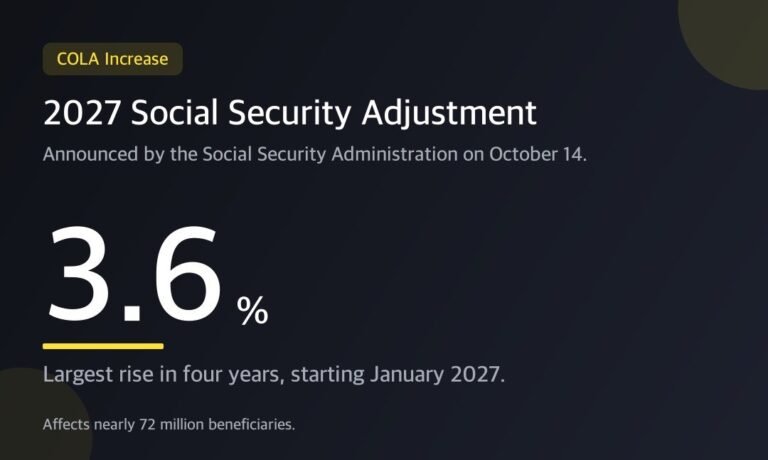
Congress set these thresholds decades ago without indexing them to inflation. As a result, standard cost-of-living adjustments continue to push more retirees over these lines each year.
Traditional IRA vs. Roth IRA Withdrawals
Traditional IRA and 401(k) withdrawals flow directly into your AGI dollar for dollar, increasing your provisional income. In contrast, qualified Roth distributions—taken after age 59.5 from a Roth account open for at least five years—stay entirely out of your AGI and do not affect provisional income.
| Feature | Traditional IRA Withdrawal | Roth IRA Withdrawal |
|---|---|---|
| Provisional Income Impact | Increases dollar for dollar | No impact |
| Taxable Social Security | Significantly increased | Unchanged |
| Effective Tax Rate | Higher due to added benefit taxation | Lower or zero |
Why Converting Before Claiming Helps
Timing is essential when managing retirement account distributions. Performing a Roth conversion after you begin claiming Socialsecurity benefits adds to your provisional income and triggers the tax torpedo.
However, converting funds during the gap years after your last paycheck but before your Social Security benefits begin avoids pulling extra benefits onto your tax return. Retirees should also keep important planning factors in mind:
- IRMAA Limits: Medicare premiums look back two years, meaning conversions at age 63 or later will influence future premium costs.
- Five-Year Rule: Earnings from a Roth account are only tax-free if the account has been open for at least five years.
- Senior Deduction Expiration: The temporary senior deduction is currently scheduled to run only through 2028.